In brief
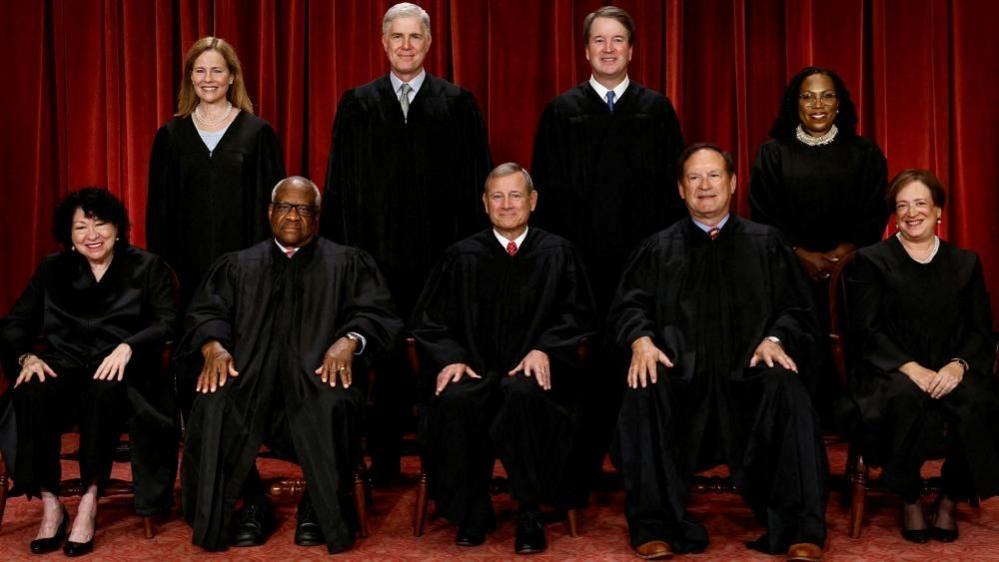
The Supreme Court affirmed the constitutional guarantee that anyone born on U.S. soil is a citizen, delivering an unexpected blow to Donald Trump’s long‑standing immigration agenda. Trump expressed frustration but quickly pushed forward legislation aimed at limiting that citizenship rule. In the same term the court also made moves that reinforce Trump’s influence over federal agencies, trade policy and campaign finance, ensuring that his power is more expansive than ever before. These decisions highlight a judicial landscape that, while occasionally challenging the president, largely expands his authority over the federal state.
In a 5‑to‑4 decision that stunned many observers, the Supreme Court upheld the constitutional right of any child born in the United States to acquire citizenship at birth, rejecting President Donald Trump’s proposal to cut that right for children of temporary visitors and undocumented migrants. The ruling represents a clear loss for Trump’s hard‑line immigration agenda and fits into a broader pattern of the court’s recent involvement in the ethnic and political dimensions of citizenship.
Trump’s reaction was characteristically muted, describing the ruling as “too bad for our country.” He then announced support for new legislation that would force Congress to adopt his preferred limits on birthright citizenship, a move that faces a steep likelihood of being blocked by the Senate’s Democratic majority and that faces constitutional scrutiny. The president’s broad reaction reflects his belief that the court’s decision still leaves room for future legislative push‑back.
Behind the headline case lie other decisions that redefine the power dynamics between the judiciary and the executive branch. In February the court struck down Trump’s tariff plan on the basis that any new trade policy must be explicitly approved by Congress, limiting the president’s ability to impose sanctions unilaterally. The same month the court affirmed the legality of his “Mexico‑style” immigration enforcement by ruling that the president may refuse to enforce the law in certain situations, a decision that has been cited as evidence of the court’s willingness to give him latitude over enforcement actions.
Both the refusal to halt the National Guard deployment in Chicago and the court’s loosening of campaign‑finance restrictions further demonstrate how the constitutional majority is exercising conservative instincts to protect the executive branch while still imposing limits on specific policy objectives. A recent ruling that ultimately struck down a key portion of the Voting Rights Act, and the court’s refusal to halt the counting of certain mail‑in ballots, have also reinforced the president’s influence over the electoral process.
These cases suggest a stare decisis that offers more than mere legal argument; they shape the very reach of presidential authority over the federal bureaucracy. The court’s recent decisions have carved out new grounds for executive interviews with regulatory officials, amplifying the president’s hand‑pick ability over appointments that direct national policy on labour, communications, environment, and finance. The court’s actions also set a precedent that will likely resonate beyond Trump’s term, providing future presidents with a broadened scope of executive power that has never existed before.
While the birthright citizenship ruling marks an important branching point, the Supreme Court’s overall climate has been to expand the governor‑style reach of the presidency. It reflects a legal strategy that keeps the court’s conservative majority intact even as it leaves braced for partisan outcomes. The interplay between court decisions and presidential initiatives will continue to define the balance of power in the United States for years to come.