In brief
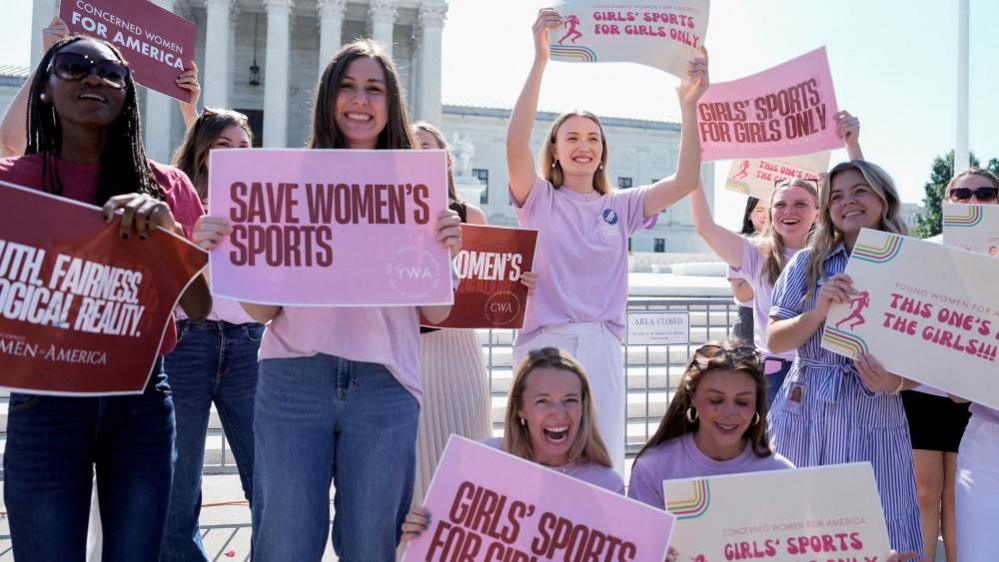
In a 9‑3 decision, the Supreme Court affirmed Idaho and West Virginia laws that restrict female sports participation to those recorded female at birth. The ruling, justified on Title IX grounds, was split along ideological lines over the 14th Amendment. President Trump praised the judgment while human‑rights advocates decry it as discriminatory. The decision marks a turning point for the ongoing debate over fairness, safety, and bodily autonomy in sports.
The United States Supreme Court has affirmed that states may enforce prohibitions preventing transgender women—individuals who identify as women but are recorded male at birth—for participation in female‑category school and college sports. The decision, issued for Idaho and West Virginia, hinges on Title IX and the constitutional 14th Amendment.
In Idaho, the ban was introduced by legislator Barbara Ehardt to safeguard “boys and men” from competing against girls. In West Virginia, 16‑year‑old contender Becky Pepper‑Jackson challenged the law, citing equal‑protection concerns. Both cases culminated in Supreme Court approval, with all nine Justices finding no violation of Title IX, though the conservative majority sided with the bans, leaving the 14th‑Amendment question split.
The ruling has drawn polarized reactions. President Donald Trump celebrated the verdict as a “BIG WIN,” and First Lady Melania Trump posted a message supporting LGBTQ rights while portraying the decision as protecting women's sports. Conversely, the Human Rights Campaign denounced the outcome, describing it as “heartbreaking” for transgender student athletes forced to sit out the competition they love.
Political and scientific arguments persist regarding whether transgender women possess inherent physical advantages. The International Olympic Committee has recently stipulated that only biological females qualify for women’s events, citing a consensus of advantages in strength‑based sports. Critics contend that the bans unfairly target a minority group and lack sufficient empirical basis for such a policy shift.
As the Supreme Court’s endorsement spreads, more states could adopt similar restrictions, which will inevitably intensify the national conversation around equity, safety, and inclusion in competitive sports.