In brief
In Minnesota, numerous immigrant families grapple with the decision to send their children to school amid fears of ICE deportation. Students like Giancarlo, although eager for education, witness a dramatic rise in absenteeism due to parental fears of detention. Amidst a backdrop of federal enforcement, schools are adapting by providing resources to ensure students receive their education safely.
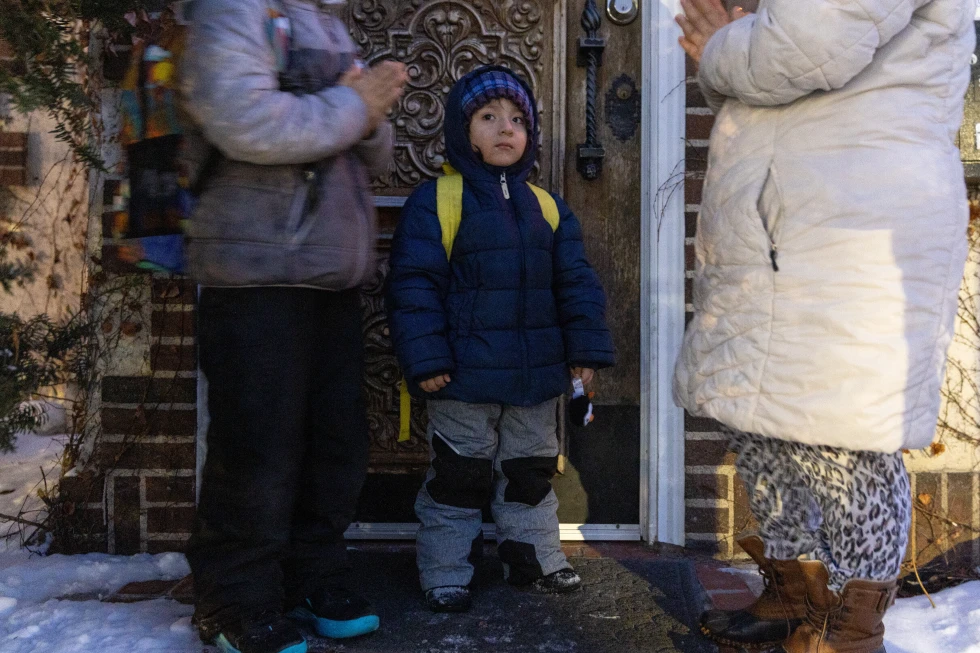
MINNEAPOLIS (AP) — In some ways, 10-year-old Giancarlo is one of the lucky ones. He still goes to school. Each morning, he and his family bundle up and leave their Minneapolis apartment to wait for his bus. His little brother hefts on his backpack, even though he stopped going to daycare weeks ago because his mom is too afraid to take him.
As they wait behind a wrought-iron fence, Giancarlo’s mother pulls the boys into the shadow of a tree to pray. It’s the only time she stops scanning the street for immigration agents. “God, please protect my son when he’s not at home,” she says in Spanish. She spoke with The Associated Press on condition of partial anonymity for the family because she fears being targeted by immigration authorities.
For many immigrant families in Minnesota, sending a child to school requires faith that federal immigration officers deployed around the state won’t detain them. Thousands of children are staying home, often for lack of door-to-door transportation — or simply trust.
The fear has turned into reality. Many parents and some children have been detained, including 5-year-old Liam Conejo Ramos, who with his father, originally from Ecuador, was taken into custody in the Minneapolis suburb of Columbia Heights as he was arriving home from school. They were sent to a detention facility in Texas but returned after a judge ordered their release.
Schools, parents, and community groups have mobilized to help students get to class so they can learn, socialize and have steady access to meals. And for those who are still sending their children, the trip to and from school is one of the only risks they’re willing to take.
“I don’t feel safe with him going to school,” Giancarlo’s mother said, shaking her head. “But every day he wakes up and wants to go. He wants to be with his friends.”
Although Giancarlo’s Minneapolis elementary school is the best thing going for him these days, he feels the weight of his family’s situation. He has lost four pounds this year and shares meals brought from school with his mother and brother. The school experience offers him joy, but the circumstances weigh heavily on his young mind and spirit.
Schools across the Twin Cities are beginning to feel the effects of the heightened ICE presence, with student absenteeism increasing significantly. The story continues to unfold as these communities adapt to a climate filled with uncertainty.