On Friday, November 6, 2026, eurozone finance ministers announced two candidates to succeed Christine Lagarde as President of the European Central Bank (ECB). Spain nominated Pablo Hernández de Cos, the general‑manager of the Bank for International Settlements, while the Netherlands put forward Klaas Knot, former chief of its central bank, to take the role if elected from February next year.
The nominations were made to follow the legal framework established in the Treaty on the Functioning of the European Union, which requires the Eurogroup—which represents the euro‑zone finance ministers—to review and forward the candidates to the ECB, the European Parliament and finally the European Council for a formal appointment.
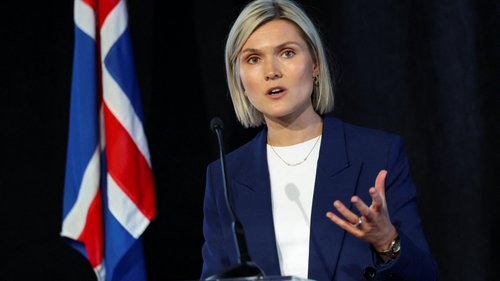
Kyriakos Pierrakakis, the president of the Eurogroup, said that at its next meeting on November 9 the committee would “take stock of these candidacies” and send the findings to the next stages of the appointment process.
At its next meeting on 9th November, the Eurogroup will take stock of these candidacies,
—Kyriakos Pierrakakis (Eurogroup)
Both nominees are described as “seasoned crisis‑fighters.” Knot served as governor of the Dutch central bank from 2014 to 2024, during which time he guided the country through the eurozone debt crisis and the COVID‑19 pandemic, applying stringent fiscal rules and coordination with the ECB. De Cos has overseen the global central‑banking community in his role at the Bank for International Settlements, working closely with the ECB on policy coordination during the coronavirus pandemic and the inflationary pressures that followed.
According to the standard procedure, the nominees will first be evaluated by the Eurogroup, then by the ECB’s management, the European Parliament and the European Council. The final appointment will be made by the European Council at its next meeting, taking into account the outcomes of each step in the selection process.
While the ECB president will officially assume the role in February, all steps of the selection process are conducted with a focus on ensuring that the new head possesses proven experience in managing economic turmoil. The treaty mandates a transparent and multi‑layered consultation to ensure that the appointment has broad support across the member states.
Given that Christine Lagarde’s term is ending in early 2027, the timing of the nominations aligns with the ECB’s schedule for a smooth transition of leadership. The European Central Bank’s confirmation of the appointment will come after the European Council’s final decision, which could be held in the next month.
The eurozone’s decision to back two veteran central bankers reflects an emphasis on resilience and crisis management in the face of recent inflation spikes and post‑pandemic financial volatility. Both candidates bring extensive experience dealing with deep economic shocks, whether it was the sovereign debt crisis or the pandemic‑related monetary challenges.
While the nominations have been announced, the candidates have yet to secure the formal endorsement of the ECB’s board or the European Parliament. If either is confirmed, the candidate’s appointment will then go to the European Council for a final ratification, usually scheduled within a few weeks of the Eurogroup’s evaluation.
In the coming days, media reports will focus on the ECB’s assessment of each nominee’s portfolio, potential policy priorities, and how they will navigate the rising inflationary pressures that the eurozone has been facing. No international body has yet released a public statement on the selection beyond the Eurogroup’s announcement, and the fate of both candidates will be decided at the Eurogroup’s November 9 meeting, with the European Council expected to finalize the appointment a few weeks thereafter.