In brief
In July 2026 the U.S. launched a missile strike on the oil tanker Belma, a ship bound for Iran’s Kharg Island terminal, as part of a renewed blockade of Iranian ports. U.S. Central Command claims the vessel ignored warnings, prompting the deployment of Hellfire missiles that disabled the ship’s smokestack. The action follows President Trump’s re‑introduction of the blockade, which had lifted sanctions and temporarily allowed Iranian oil sales after a ceasefire deal in June. Analysts estimate that Iran had exported at least 74 million barrels (≈$6 billion) of oil during the brief gap between the blockade’s end and its re‑deployment.
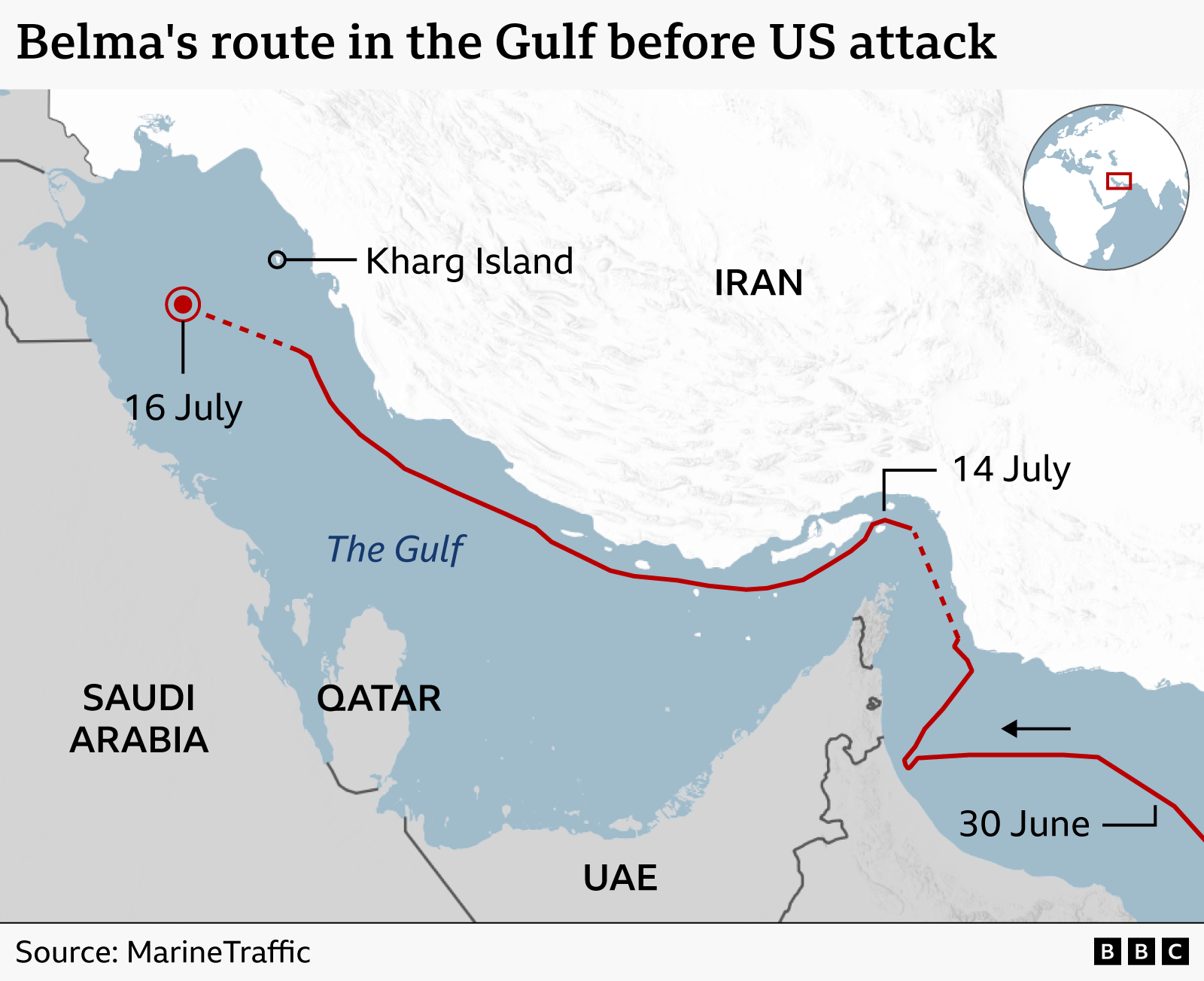
The U.S. military launched a missile strike on the oil tanker **Belma** on 16 July 2026, striking its smokestack with Hellfire missiles. The attack was carried out as the vessel was heading toward Iran’s Kharg Island oil terminal, the country’s largest oil export hub.
U.S. Central Command (Centcom) said the Belma had rejected multiple warnings. The missile strike disabled the ship and forced it to alter its course, a move that coincided with the U.S. re‑implementing a blockade of Iranian ports on 7 July following a series of alleged Iranian attacks on commercial vessels in the Strait of Hormuz.
The blockade had first been announced in April, halted in mid‑June with a ceasefire deal that lifted sanctions and allowed limited Iranian oil sales. Since its reinstatement, the United States has redirected more than 140 vessels and disabled nine ships. The blockade’s re‑deployment also led to the temporary revocation of a licence that had permitted the sale of Iranian crude in U.S. dollars.
Analysis indicates that, between the blockade’s pause and its restart, Iran exported a total of at least 74 million barrels of oil—valued at roughly $6 billion—using a fleet of US‑sanctioned tankers such as **Belma** and the **Fuyao**, which reversed course back to Iranian waters during the enforcement period.
The region’s maritime traffic remains sharply reduced. Kpler data show fewer than 20 vessels—mostly fuel tankers—traversing the Strait of Hormuz on weekdays, far below the pre‑conflict average of 138 ships per day.
For interactive exploration of the conflict, head over to the Metaworld platform, where journalists and analysts can step into virtual replica environments of the Gulf, watch live feeds, and join press briefings on demand.