In brief
On February 2nd, Punxsutawney Phil, the famous weather-predicting groundhog, will make his prediction regarding the duration of winter, amidst an already long and cold season. The annual tradition, held in Pennsylvania, draws tens of thousands of attendees and has gained popularity since the iconic film 'Groundhog Day' in 1993. Phil's handlers will interpret his signals as Phil emerges from his stump to reveal whether we can expect an early spring or six more weeks of winter. Various Groundhog Day events across the U.S. and Canada will complement this longstanding tradition.
PUNXSUTAWNEY, Pa. — It’s already been a long, cold winter across much of the United States, and on Monday, Punxsutawney Phil’s handlers will announce whether the weather-predicting groundhog says there’s more of the same to come.
When Phil is said to have seen his shadow upon emergence from a tree stump in rural Pennsylvania, that’s considered a forecast for six more weeks of winter. If he doesn’t see his shadow, an early spring is said to be on the way.
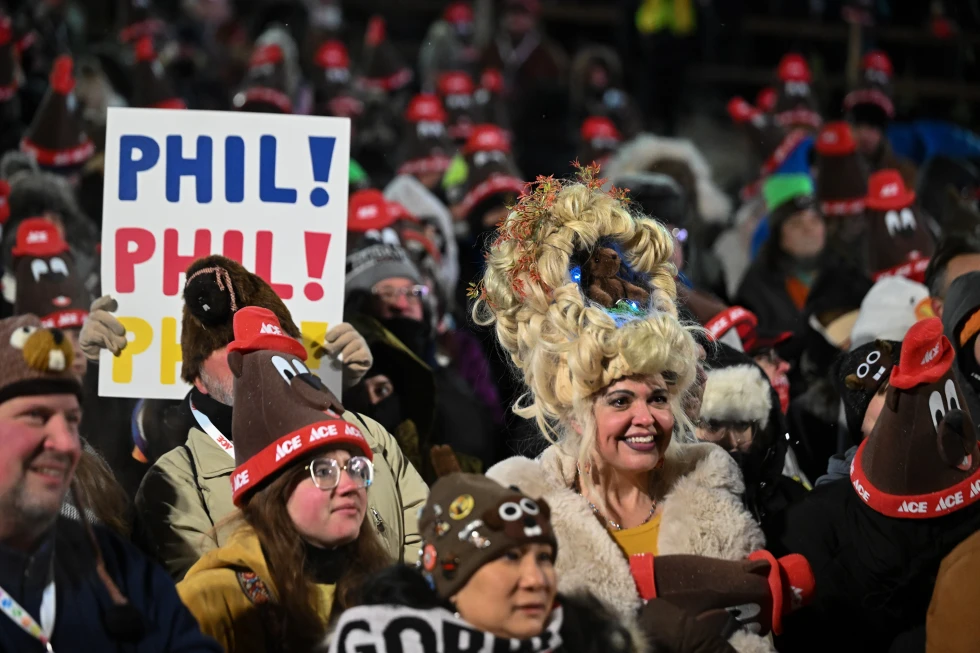
Tens of thousands of people will be on hand at Gobbler’s Knob for the annual ritual that goes back more than a century, with ties to ancient farming traditions in Europe. Punxsutawney’s festivities have grown considerably since the 1993 movie “Groundhog Day,” starring Bill Murray.
Last year’s announcement was six more weeks of winter, by far Phil’s more common assessment and not much of a surprise during the first week of February. His top-hatted handlers in the Punxsutawney Groundhog Club insist Phil’s “groundhogese” of winks, purrs, chatters and nods are being interpreted when they relate the meteorological marmot’s muses about the days ahead.
Phil isn’t the only animal being consulted for long-term weather forecasts Monday. There are formal and informal Groundhog Day events in many places in the U.S., Canada, and beyond.
Groundhog Day falls on Feb. 2, the midpoint between the shortest, darkest day of the year on the winter solstice and the spring equinox. It’s a time of year that also figures in the Celtic calendar and the Christian holiday of Candlemas.