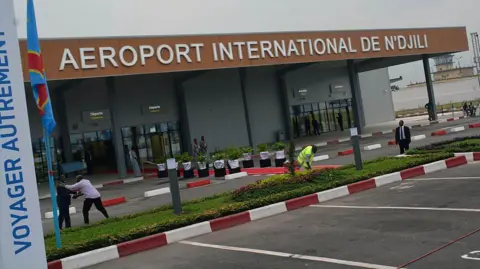
The Democratic Republic of Congo (DR Congo) has accepted its first group of deportees from the United States, marking a pivotal moment in international immigration policy. This group consists of fifteen individuals reportedly from South America, who landed at Kinshasa's N'djili International Airport.
The acceptance of these deportees comes amid a broader initiative by the US to expel undocumented immigrants and reflect President Trump's stringent immigration policies. DR Congo's government confirmed that the individuals' stay is temporary, with the US funding their reception and care.
This arrangement aligns with DR Congo's commitment to human dignity and international solidarity, as stated by government officials. Importantly, this is not seen as a permanent relocation strategy but rather a humanitarian response.
The DR Congo joins other African nations, such as Ghana and South Sudan, which have previously accepted deportees from the US. The State Department confirmed its unwavering commitment to curb illegal immigration, underscoring that the deportees are admitted under short-stay permits, adhering to national legislation on foreign entries.
This recent development also highlights ongoing negotiations between the US and DR Congo over access to the country’s mineral resources, alongside efforts to facilitate peace in regional conflicts like the ongoing tensions with Rwanda-backed M23 rebels.
As this new chapter unfolds, further discussions and collaborations regarding immigration and international partnerships are anticipated.
The acceptance of these deportees comes amid a broader initiative by the US to expel undocumented immigrants and reflect President Trump's stringent immigration policies. DR Congo's government confirmed that the individuals' stay is temporary, with the US funding their reception and care.
This arrangement aligns with DR Congo's commitment to human dignity and international solidarity, as stated by government officials. Importantly, this is not seen as a permanent relocation strategy but rather a humanitarian response.
The DR Congo joins other African nations, such as Ghana and South Sudan, which have previously accepted deportees from the US. The State Department confirmed its unwavering commitment to curb illegal immigration, underscoring that the deportees are admitted under short-stay permits, adhering to national legislation on foreign entries.
This recent development also highlights ongoing negotiations between the US and DR Congo over access to the country’s mineral resources, alongside efforts to facilitate peace in regional conflicts like the ongoing tensions with Rwanda-backed M23 rebels.
As this new chapter unfolds, further discussions and collaborations regarding immigration and international partnerships are anticipated.