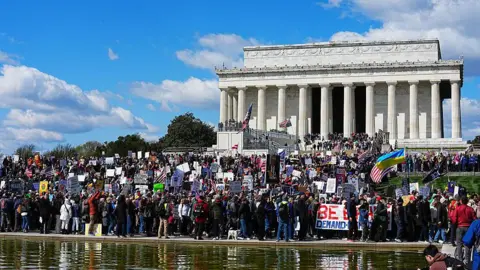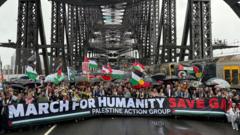
The historic March for Humanity across Sydney Harbour Bridge proceeded on Sunday, following a surprising late endorsement from the Supreme Court. This protest, attended by thousands including high-profile figures like WikiLeaks founder Julian Assange, took place amidst heavy rain, showcasing deep local support for Palestinian rights.
The event came after the Palestine Action Group submitted a notice for the march, citing the urgent humanitarian crisis in Gaza. Initially, the police opposed the assembly due to safety issues, claiming insufficient time for traffic management could lead to chaos. Premier Chris Minns echoed these concerns, expressing a commitment to public order.
However, just before the protest began, Justice Belinda Rigg ruled in favor of the demonstrators, stating that while safety concerns were valid, the need for urgent humanitarian expression outweighed these risks. She ruled that the march could proceed and directed that the bridge be closed to traffic, ensuring that marchers were protected under the Summary Offences Act and would not face charges for blocking roads.
The protest caused significant disruptions to Sydney’s transport system, prompting officials to advise motorists to steer clear of the area. While the police did not provide an official estimate of attendees, the visible turnout suggested strong community involvement.
The NSW Jewish Board of Deputies expressed disappointment over the court's decision, indicating a divide in local sentiment regarding the protest. The situation comes as Australia faces increasing international pressure to recognize Palestinian statehood, following signals from several other nations in advance of the upcoming United Nations General Assembly.
Prime Minister Anthony Albanese reiterated the government's position, emphasizing the necessity for conditions to ensure Israel's security before any potential recognition of a Palestinian state. He mentioned that Australia would not act solely based on the actions of other nations, reaffirming the need for a measured approach to this critical issue.
The event came after the Palestine Action Group submitted a notice for the march, citing the urgent humanitarian crisis in Gaza. Initially, the police opposed the assembly due to safety issues, claiming insufficient time for traffic management could lead to chaos. Premier Chris Minns echoed these concerns, expressing a commitment to public order.
However, just before the protest began, Justice Belinda Rigg ruled in favor of the demonstrators, stating that while safety concerns were valid, the need for urgent humanitarian expression outweighed these risks. She ruled that the march could proceed and directed that the bridge be closed to traffic, ensuring that marchers were protected under the Summary Offences Act and would not face charges for blocking roads.
The protest caused significant disruptions to Sydney’s transport system, prompting officials to advise motorists to steer clear of the area. While the police did not provide an official estimate of attendees, the visible turnout suggested strong community involvement.
The NSW Jewish Board of Deputies expressed disappointment over the court's decision, indicating a divide in local sentiment regarding the protest. The situation comes as Australia faces increasing international pressure to recognize Palestinian statehood, following signals from several other nations in advance of the upcoming United Nations General Assembly.
Prime Minister Anthony Albanese reiterated the government's position, emphasizing the necessity for conditions to ensure Israel's security before any potential recognition of a Palestinian state. He mentioned that Australia would not act solely based on the actions of other nations, reaffirming the need for a measured approach to this critical issue.