
In brief
President Donald Trump marked the launch of a new child savings scheme by ringing the Wall Street opening bell at the Oval Office. The Trump Accounts program offers a $1,000 start‑up credit for babies born during his second term and allows family or employer contributions of up to $5,000 each year. While the pledge aims to seed early investment for millions of children, critics argue the rules are too complex, penalties may deter low‑income families, and the program's uptake so far is modest. Supporters say the initial subsidy removes a key barrier to entering the markets. Economic analysts divide on whether the scheme will truly accelerate financial empowerment for the next generation.
Will Trump Accounts Hold Up for American Kids?
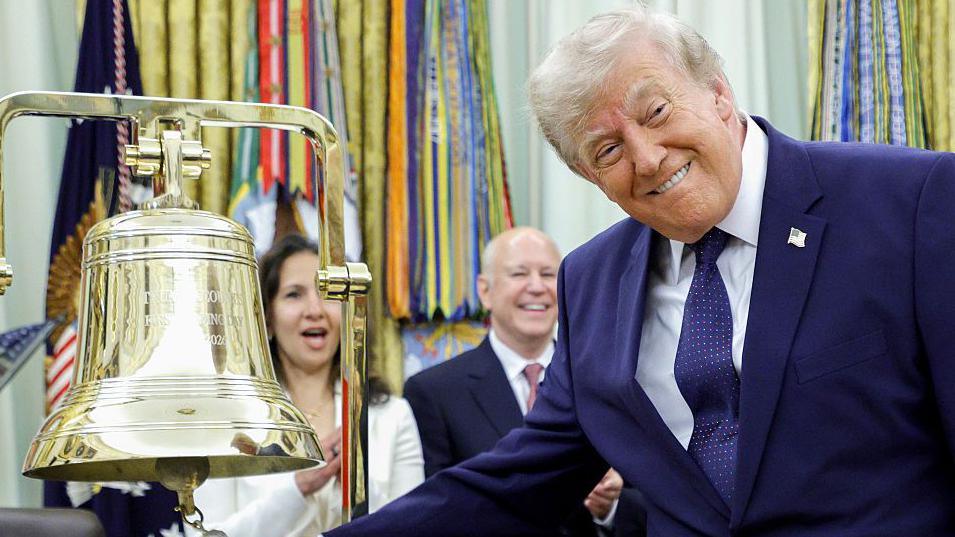
The Oval Office took an unlikely turn into Wall Street when President Donald Trump circled the opening bell on Monday, marking the launch of a new savings plan for children born before the end of his administration.
The Trump Accounts scheme gives every U.S. child under eighteen a free $1,000 contribution if they were born between 2025 and 2028. Parents, relatives or employers may then add up to $5,000 per year to the account, with all funds invested in a low-cost S&P 500 index fund. With tax‑free growth, withdrawals before 59½ are subject to a 10% penalty unless used for education, a first home or emergency expenses.
Policy experts are split. The White House emphasizes the initiative as a way to broaden stock ownership among younger and lower‑income families, arguing that many households currently have no exposure to the markets. By contrast, Will McBride of the Tax Foundation says the complexity of eligibility and contribution rules will mean the program mainly benefits those who are already financially literate and well‑off.
Financial advisers from Edward Jones argue that the $1,000 start is “a real on‑ramp” for many families, while Adam Michel of the Cato Institute cautions that the high penalty for early withdrawal could force lower‑income children to liquidate the account at 18 when they need the money most.
So far, roughly six million families have signed up, representing a fraction of the tens of millions of children who could benefit. The White House notes that more than 500,000 baby‑registered accounts have received the initial subsidy and that total contributions have already reached approximately $125 million.
If the program’s $1,000 seed grows at the projected average of the S&P 500, a child could see a pot of around $6,000 by age 18 without further contributions. Families adding $250 each year could raise that amount to roughly $19,000, while maximum contributions could inflate the balance to well over $270,000.
The initiative is backed by corporate giants such as BlackRock, Visa and Dell, who hope that early exposure will shape future investors and consumers.