
In brief
Washington has officially rejected a long‑term renewal of the US‑Mexico‑Canada Agreement (USMCA) in its current form, after a senior US official indicated the administration “did not agree to renew the USMCA in its current form.” The decision removes the 16‑year auto extension that would have kept the pact intact until 2042 and sets a ten‑year countdown to the deal’s possible expiration. The move leaves manufacturers, farmers and traders in North America facing fresh uncertainty over rules of origin, dairy market access and protection from outside competitors. While some US trade groups welcome annual reviews to salvage parts of the deal, critics warn that the lack of a long‑term commitment could cost an estimated $2 trillion in annual cross‑border trade.
According to a senior U.S. official, Washington will not approve the automatic 16‑year extension that would have kept the United States‑Mexico‑Canada Agreement (USMCA) alive until 2042. The decision was made after the administration decided “not to rubber‑stamp a USMCA renewal without addressing existing issues,” triggering a ten‑year countdown that could see the pact expire as soon as 2036.
The USMCA, which replaced NAFTA in 2020, governs roughly $2 trillion in annual trade between the three nations. Key disputes that remain unresolved include automotive rules of origin, U.S. dairy market access, and the risk of third‑party countries—particularly China—leveraging the North American market.
While business groups in the United States and across the continent had urged the province to extend the agreement, the move provides an opportunity for manufacturers, especially in the auto and steel sectors, to negotiate improvements on a yearly basis. The American Iron and Steel Institute and the Steel Manufacturers Association have expressed support for this approach, arguing that a strong annual review gives negotiators bargaining power to "fix parts of the deal".
Economic experts warn that the lack of a clear long‑term framework adds volatility to supply chains and could erode the certainty that U.S. exporters, importers and farmers traditionally relied on. The United States Chamber of Commerce has noted that sectors such as manufacturing and agriculture depend heavily on cross‑border stability.
The next steps will focus on annual negotiations that may reshuffle rules in favor of U.S. factories, but the uncertainty surrounding the agreement’s future remains a key point of tension for policymakers and traders alike.
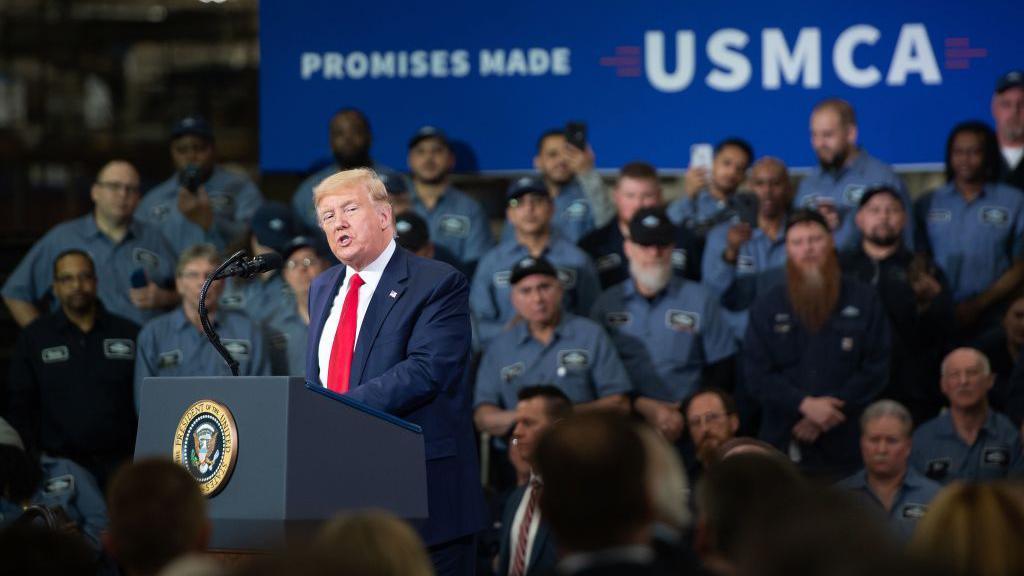
Image credit: Getty Images.