In brief
After a surge of Canadian wildfires sent thick smoke across the northern United States, President Donald Trump has threatened to impose tariffs on Canadian goods, accusing the country of “willful negligence.” The move follows complaints from U.S. lawmakers, Ontario’s premier, and a government debate over wildfire management and climate accountability. While Canada has not yet responded, air quality alerts are in place across several U.S. states, leading to cancellations of outdoor events and heightened public health concerns.
Trump threatens tariffs over Canada’s wildfire smoke
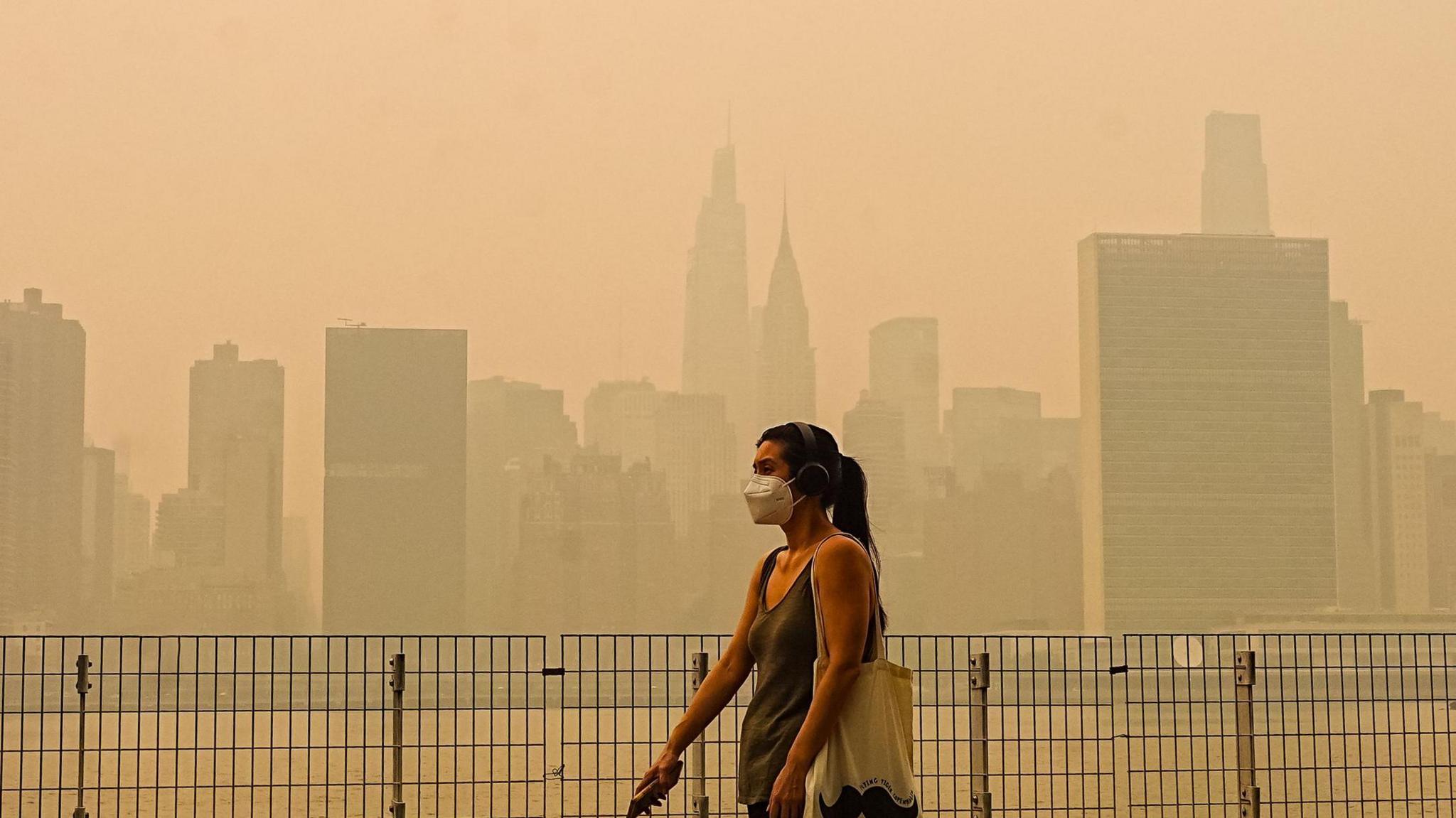
U.S. President Donald Trump has threatened to impose new tariffs on Canadian goods after a summer of massive fires in Canada sent a blanket of smoke across the northern United States, choking major cities with an orange haze.
Trump’s threat comes after U.S. lawmakers complained that the smoke was a direct result of “willful negligence” in Canada’s forest management. Meanwhile, Ontario’s premier Doug Ford called for U.S. support in battling the blazes rather than public criticism.
According to the Canadian Wildland Fire Information System there were 888 active fires in Canada as of Friday, with 190 in Ontario and over 3 million hectares already devastated. These fires produced a thick blanket of smoke that lifted across states such as Minnesota, Michigan, Ohio, Pennsylvania and New York, prompting hazardous air quality alerts and the cancellation of numerous outdoor events.
Air quality data from Swiss platform IQAir shows Detroit as the world’s worst affected city, followed by Chicago, Washington, D.C. and New York.
In an open letter, U.S. lawmakers John James, John Moolenaar, Jack Bergman and Lisa McClain warned Canada that continued inaction could lead to “direct involvement in cross‑border wildfire protection.”
Canadian officials have not yet responded to Trump’s threat, though Prime Minister Mark Carney has said that addressing climate change is a shared responsibility.
Experts note that weather does not recognize international borders. Dr Patrick James of the University of Toronto explained that once smoke reaches the atmosphere it is carried wherever the wind takes it, and that wildfires in the United States have previously impacted Canada too.
Dr Anabela Bonada from the University of Waterloo added that climate change, which creates hotter, drier conditions, drives the severity of wildfire seasons globally and that it would be inaccurate to blame Canada alone.
Related resources:
IQAir world air quality tracker
Climate change impacts on wildfire frequency