In brief
In a dramatic turn of events, Pittsburgh's media landscape has experienced both impending closures and promising revivals. The iconic Pittsburgh Post-Gazette was saved from closure by a nonprofit foundation just weeks after the alternative City Paper also announced its return under new ownership. These developments signify resilience in local journalism, although they are met with ongoing challenges related to labor issues and changing public interest in news consumption.
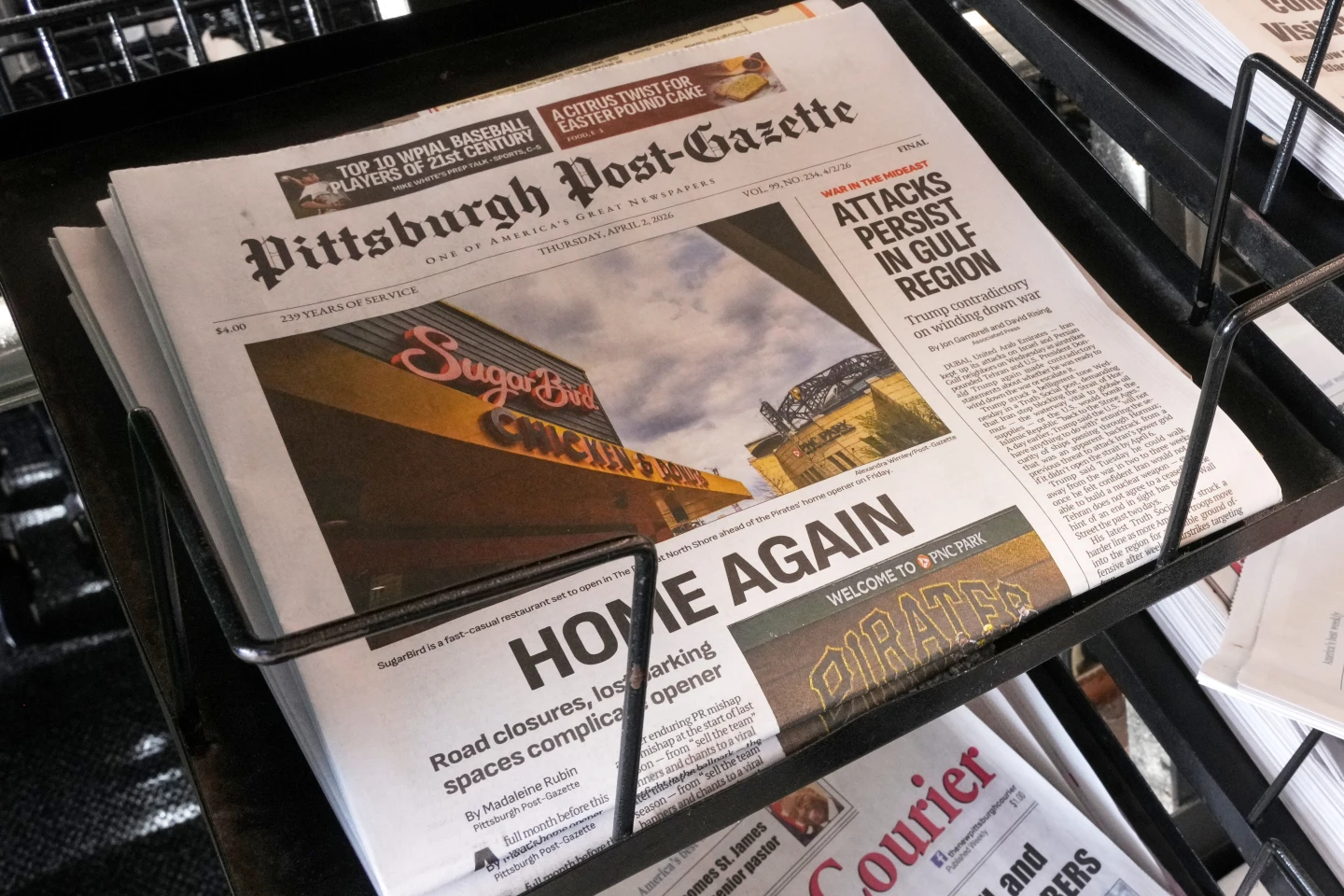
PITTSBURGH (AP) — In a matter of weeks this spring, Pittsburgh media has navigated a near-death experience and a subsequent revival. The Pittsburgh Post-Gazette, a historic news outlet, announced its sale to a nonprofit committed to preserving its legacy, avoiding closure that would have left Pittsburgh without a city-based paper.
Previously, the alternative outlet Pittsburgh City Paper faced closure after 34 years but has since re-emerged under new ownership, determined to continue serving the community with important local news.
These developments are seen as rare positive strides amidst a turbulent local news industry that has witnessed the shuttering of newsrooms and diminished job security for journalists over recent years. Halle Stockton of Public Source noted the necessity of resilience, stating that sometimes a jolt makes people recognize what truly matters.
The Rich History of the Post-Gazette
The Pittsburgh Post-Gazette, which began in 1786, has undergone numerous transformations throughout its history, holding a reputation for solid journalism, including a Pulitzer Prize-winning report on the Tree of Life shooting. Its recent years, marred by labor strife, faced uncertainty until its nonprofit sale was announced, much to the relief of the community.
A New Chapter for the City Paper
Recovering from its own near closure, the Pittsburgh City Paper has returned to cover community news, arts, and politics, under new nonprofit ownership. This shift marks a significant change in Pittsburgh's civic journalism landscape.
Future Prospects
The future of the Post-Gazette and broader local journalism hangs in balance, with both outlets rebuilding under new models. Local interest in news remains a challenge, as younger audiences increasingly turn to social media over traditional outlets. Experts believe collaboration among local news organizations could alleviate some pressures as they work to engage the community.
As the landscape continues to evolve, stakeholders in Pittsburgh hope to foster a resilient media framework that supports both profitability and public service.