
In brief
A scorching heatwave has pushed Italy’s 27 major cities to a red alert for extreme temperatures, with 25 expected under the highest warning by Monday. Health officials warn of risks for everyone, from children to the elderly, and urge residents to stay indoors and stay hydrated. The heat is driven by a subtropical anticyclone over the Mediterranean, while at the same time Europe battles catastrophic wildfires that have been fueled by similar conditions. Climate change is accelerating Europe’s warming, causing more intense heatwaves and larger fires, and the Ministry of Health advises people to avoid direct sunlight during peak hours. This crisis highlights the urgent need for adaptive measures and climate action.
Heatwave overview
Italy is putting nearly all of its major cities on the highest “red” alert for high temperatures, as a new heatwave grips the country. Health officials say 19 cities from north to south – including the capital Rome, Milan, Venice and Naples – are already at red alert, and by Monday all but two cities will be.
Temperatures hit mid-30s C in many places on Saturday, and authorities warn of risks to even healthy and active people – not just groups including the elderly, very young children and people with chronic illnesses.
Red Alert details
In its latest heatwave bulletin published on Saturday, the Italian health ministry says that by Monday, some 25 of the country’s 27 major cities will be on red alert. Only Reggio Calabria at the southern tip of Italy’s “boot” and Messina on Sicily will be at the second-highest “amber” alert.
Residents are urged to avoid exposure to heat and direct sunlight between 11:00 and 18:00, stay indoors and drink plenty of fluids. The extreme heat is caused by a subtropical anticyclone from North Africa that is now strengthening over the Mediterranean.
Wildfires across Europe
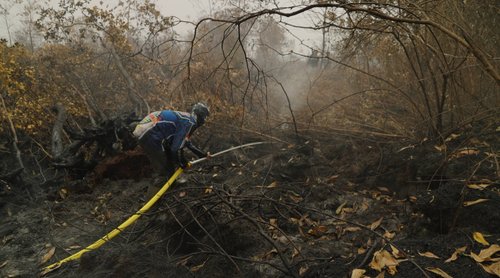
Firefighters in Greece, France, Portugal and Spain are still tackling blazes spanning thousands of hectares. In France, some 2,500 people were evacuated in the Var region after a blaze reignited. In Spain, more than 200,000 hectares of land has burnt in 2026 – roughly five times above the average by this point in the year. Greece has also seen hundreds of tourists evacuated by sea from coastal towns hemmed in by wildfires.
Climate context
Climate change is driving up temperatures around the world, and Europe is the fastest warming continent, heating up twice as fast as the global average, according to the Copernicus Climate Change Service. This is causing increased summer heatwaves, greater pressure on Europe’s water supply, and more intense wildfires.