In brief
After the death of Supreme Leader Ayatollah Ali Khamenei, Tehran’s streets became a stage for a political spectacle. The funeral procession, slowed by millions of mourners, was designed to showcase a message of resistance and revenge against perceived adversaries. Mourners chanted slogans such as "death to America" while officials and major media displayed slogans aimed at President Trump. The spectacle closed with the burial of Khamenei’s family members in a grand ceremony that doubled as a political rally for the new leadership, setting the stage for future negotiations amid severe sanctions and war damage. The funeral has become a touchstone for Iran’s evolving narrative of defiance.
Three days of public mourning in Tehran the world saw as a display of power
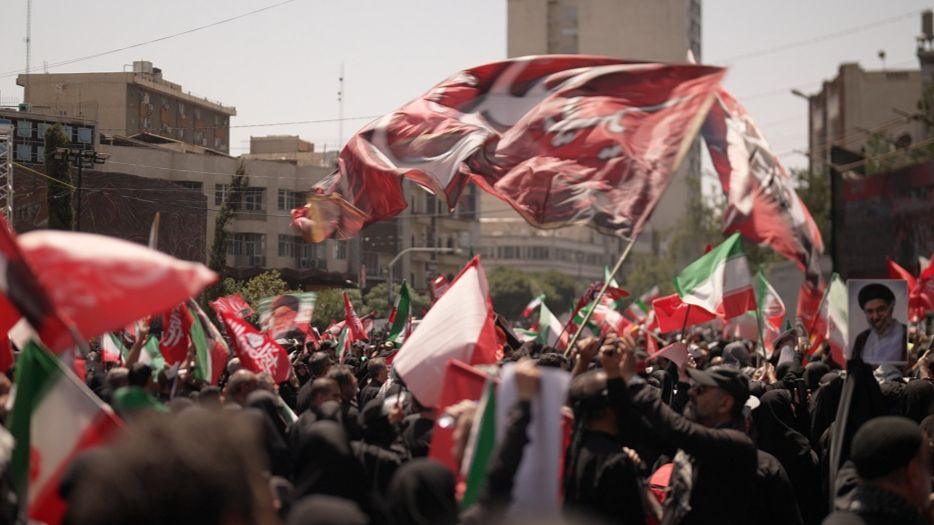
The funeral cortège carried the coffins of Ayatollah Ali Khamenei and four of his family members along a 10km route that stalled repeatedly as millions of mourners gathered – one of the largest crowds Iran has seen in years.
A page of political messaging was unfolded when the parade, staged by the new leadership, emphasised the twin themes of resistance and revenge against perceived enemies. Even as many citizens were grappling with the fallout of two wars, soaring inflation and the memory of January’s anti‑government protests, this procession was ruled by a carefully choreographed narrative that spread over Tehran’s busy streets.
In his speech, President Masoud Pezeshkian rejected the notion that the tears shed were fabricated, declaring that the grief at the streets was that of Iran’s soul on the world stage. He warned that “the world will witness the message that Iran sends in its farewell to Khamenei.”
The march was punctuated by stencilled slogans – “death to America”, “death to Israel” and “Our revenge is inevitable” – that echoed across public squares. The procession’s speed was influenced by the huge crowds chanting and jeering in the streets, showing that the message was meant for the world, not just the Iranian public.
The day’s significance was heightened by the presence of foreign journalists, a rare opportunity in Iran, and the insertion of posters critiquing President Trump in English. In addition, the organisers urged visitors and journalists to tell the truth, signalling a call to keep the narrative open while looping in the locals’ desire for justice.
The funeral procession also showcased the new leadership’s vision for a re‑imagined national identity. In a stark contrast to the previous funeral for Ayatollah Khomeini, the coffin with Khamenei’s 14‑month‑old granddaughter was painted in the Iranian flag’s colours – green, red and white – a statement of the flag’s enduring symbolism within the Shiite community.
In the wave of national grief, older voices from 1979 were echoed in the current burial, a symbolic moment that will define the new era with Supreme Leader Mojtaba Khamanei. The chaotic history of Iran’s revolutionary era, still tinged with the memory of its founding leader’s burial, highlights the heavy weight of power that the new leadership will carry.
The end of the funeral series will take place on Thursday, where the remains of Khamenei’s family members will be laid to rest in a grand ceremony at the Imam Reza shrine in Mashhad, a destination that underlines the renewal of faith and state sovereignty in Iran’s fragile future. The new leadership, now in a turbulent political environment, must negotiate pressure from both the United States and the blocking of sanctions amid an ongoing war.
An image of the funeral procession aboard a decorated flat‑bed truck with intricate latticework and Arabic Islamic script showcases the grieving people as well as carrying the coffins painted with the Iranian flag’s reds, greens, and whites, layered over by the roar of hostilities against Israel and the United States.