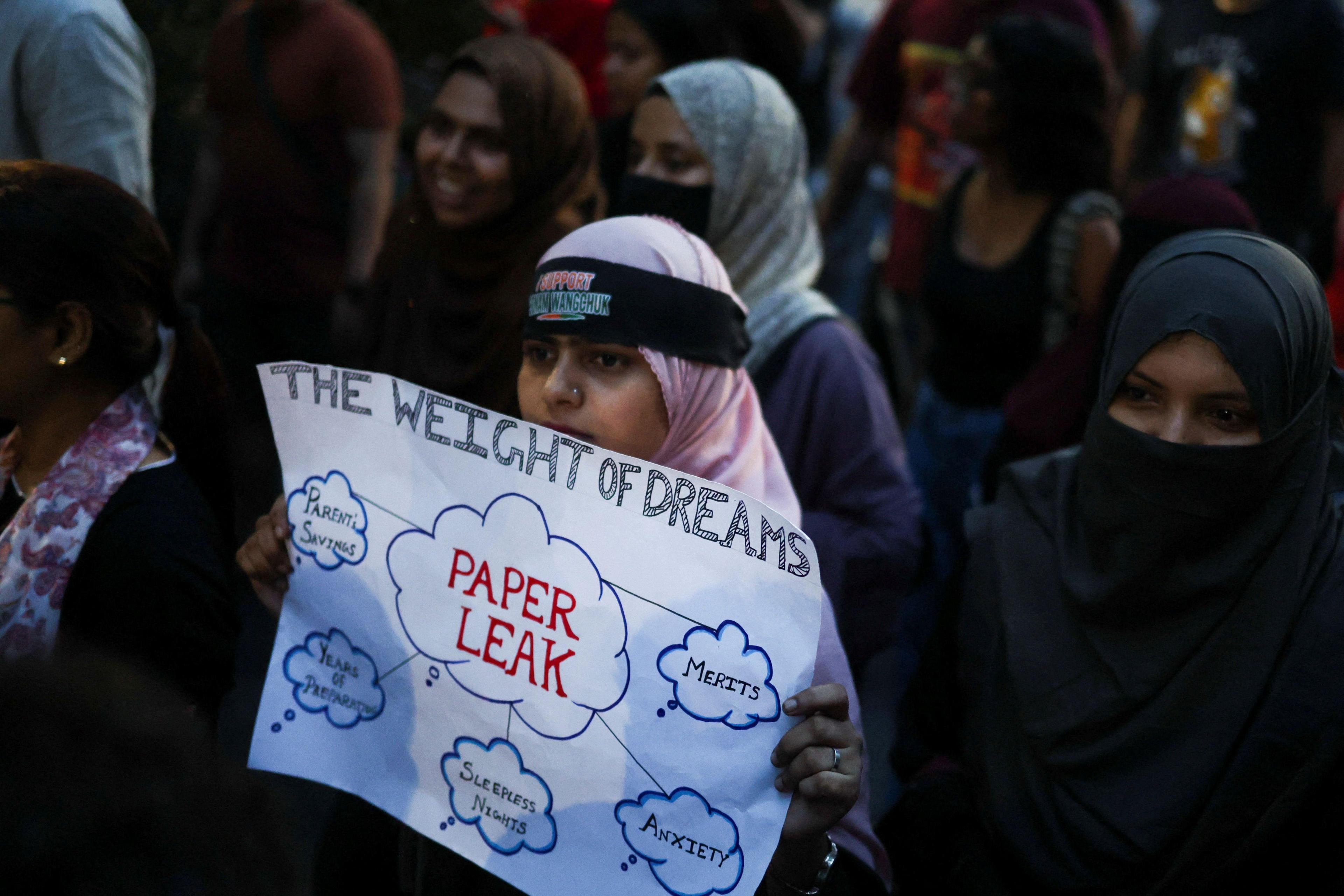
In late July, thousands marched in Delhi demanding the resignation of Education Minister Dharmendra Pradhan after a series of National Eligibility cum Entrance Test (NEET) paper leaks. Over 20 students are blamed for suicide linked to the scandals, and the protest has reignited a debate over exam security.
India’s chief minister Narendra Modi responded by appointing an executive task force led by Nandan Nilekani—former Infosys chief—to overhaul the National Testing Agency (NTA). The plan is to shift NEET from paper‑based to computer‑based testing (CBT) to make the exams harder to tamper with.
The Supreme Court welcomed the government’s initiative but warned that CBt alone will not stop leaks, underscoring the deeper issues of trust, governance and incentive structures. The 2024 leak was linked to a compromised printing‑chain, while the 2026 incident exposed weaknesses even before the papers reached the secure chain of custody.
Prof V Kamakoti, IIT Madras director and task‑force member, said the system’s “root of trust” lies with question setters and invigilators. He proposes CCTV and AI‑driven monitoring for invigilators, but stresses that the core problem is ensuring that at least one trusted individual per paper is compromised, the exam fails.
CBT could reduce physical leaks; IIT Madras runs large‑scale digital exams like GATE and the Joint Entrance Examination (JEE) with air‑gapped networks and “red‑team” penetration testing to guard against hacking. Still, no system is immune to human fraud or statistical inequities: a faulty mouse can disrupt concentration, and digital proficiency can advantage students who attend coaching institutes.
Critics argue that reliance on a single high‑stakes exam creates unavoidable incentives for malpractice. They call for multiple equivalent question papers, localised tests, frequent audits, and a diversification of entry routes into higher education to dilate the stakes.
The task‑force has a tight deadline. India’s next entrance‑exam season runs from December to June, so any major changes need to be finalised within a month or two. Success will hinge not only on technology, but on restoring students’ faith that the system remains fair and transparent.