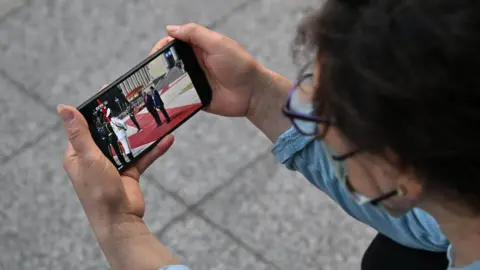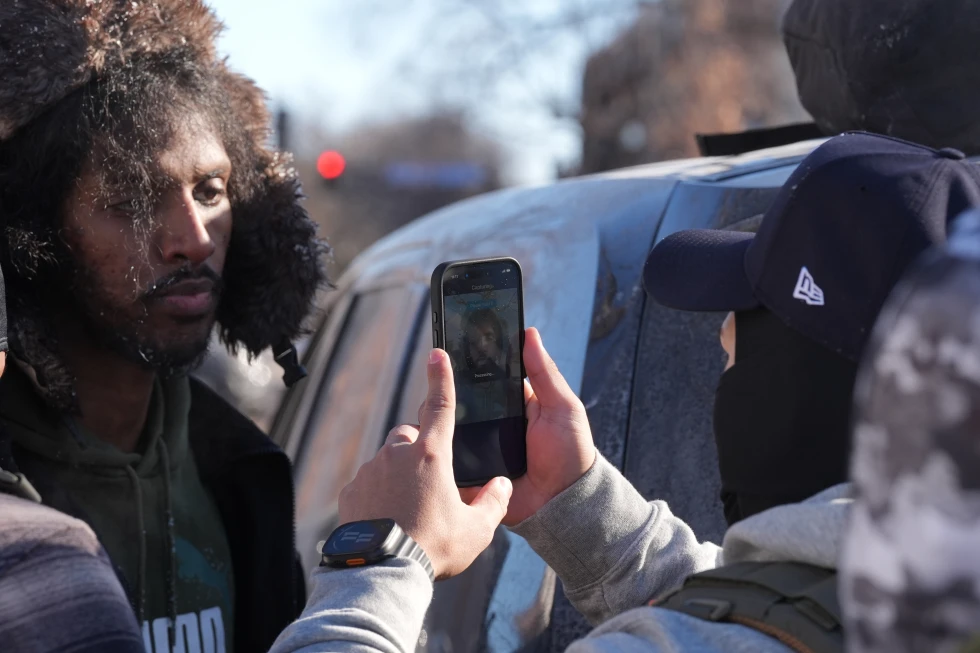
Luis Martinez was confronted on a freezing morning in Minneapolis when federal agents boxed in the SUV he was driving, enforcing President Trump's immigration crackdown which has come under scrutiny following the fatal shootings of two U.S. citizens. The agents demanded his ID and scanned his face with a cellphone, emphasizing the question: Are you a U.S. citizen? This chilling encounter illustrates the aggressive utilization of biometric technology in current immigration enforcement practices.
In delivering its immigration policies, the Trump administration has significantly increased the deployment of federal personnel in Minnesota, claiming enforcement is aimed at serious criminal offenders. Yet, widespread use of biometric surveillance and extensive data sharing with various jurisdictions reveal a greater scope, raising civil liberties concerns about citizens potentially being unfairly targeted.
Experts argue that the lack of transparency and inadequate oversight over such surveillance systems pose a clear threat to both citizens and immigrants. The encounter highlights how personal data is increasingly accessible due to agreements between agencies and privatized tech firms, enabling profiling and monitoring of wide populations.
During the incident with Martinez, agents used facial recognition technology that failed to yield a match, releasing him only after he produced a U.S. passport, which he had carried for protection. This experience starkly contrasts with his previous belief that cultural diversity made Minnesota a safe haven for all.
Navigating through heightened surveillance tools, agencies can now closely monitor individuals and their movements, an invasion of privacy that many fear could spiral out of control. The Department of Homeland Security, when approached regarding their techniques, declined to provide further insight into their operational methods. The chilling implications of inaccessible governmental oversight are acknowledged by civil liberties groups and drawn to attention by former officials.
As technologies such as Mobile Fortify are implemented to facilitate immigration enforcement, the alarming costs of expanding surveillance operations remain a topic for debate. Critics assert that the potential misuse of collected data exacerbates existing fears of government overreach, further installing a culture of pervasive surveillance.