In brief
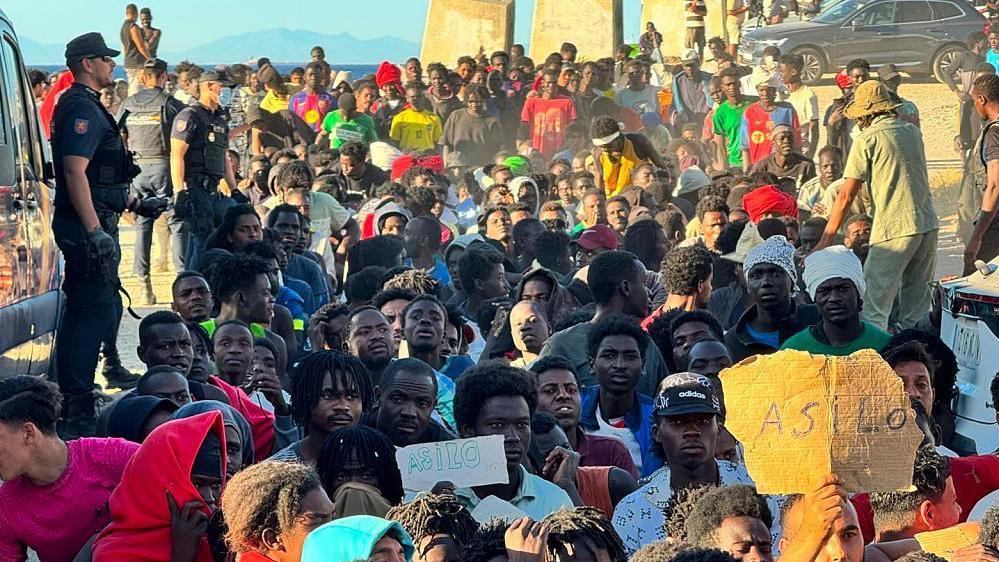
In late July, more than 70,000 migrants crossed into the Spanish enclave of Ceuta, sparking a crisis that prompted an urgent meeting of EU interior ministers. Portugal, Italy and other members voiced concern, with Italy suspending its Schengen‑free‑movement policy with Spain and demanding stronger border controls. Spain’s Interior Minister Fernando Grande‑Marlaska defended the nation’s response, committing to return refugees to Morocco and signalling cooperation with Moroccan authorities. EU Commissioner Magnus Brunner praised the handling as a successful “test of resilience” and offered emergency financial aid to reinforce Spain’s borders. Amid the crisis, Italy and other allies demanded a temporary lift of Spain’s Schengen membership, though the enclave is not part of Schengen, meaning the impact would be limited to air travel.
The European Union has applauded Spain for its swift handling of a sudden surge of migrants entering the North‑African enclave of Ceuta, following a meeting of EU interior ministers on Tuesday.
Over the 30‑31 July period, the Spanish interior minister said more than 72,000 migrants crossed into Ceuta, with an estimated 70,000 already sent back to Morocco. The crisis has taken a human toll: at least 75 people died on the Spanish side of the border, 11 reported in Morocco.
The crisis drew sharp reactions: Italy described the images from Ceuta as “shocking” and temporarily suspended its Schengen agreement with Spain, a move that, however, applies only to air travel as the enclave does not share a land border with Italy.
The meeting, chaired by Irish Justice Minister Jim O’Callaghan, saw EU leaders underline the need for a united European response, praising Spain’s risk mitigation and emphasising solidarity. Finland and Denmark backed Italy’s decision, while Czech Prime Minister Andrej Babiš called for a temporary suspension of Spain’s Schengen status.
Spanish Prime Minister Pedro Sánchez denounced attacks by other EU nations as driven by “prejudice, fake news and political interests,” reminding members that Ceuta is not part of the Schengen zone. Spain’s interior minister emphasized that the Schengen border remained uncompromised, hoping Italy would lift added checks soon.
EU Commissioner Magnus Brunner described the episode as a “test of European resilience,” affirming that the crisis had been successfully navigated and vice‑versa. He also announced that the EU would provide emergency financial support to strengthen border controls.
The enormous influx is believed to have been fueled by criminal networks and social‑media misinformation following a Spanish Supreme Court ruling that pressured migrants at sea to not be returned to Morocco without trial.
For the remaining migrants in Ceuta, Spanish authorities are working closely with Morocco to ensure swift return and are specifically managing the welfare of children, with 800 unaccompanied minors reported in local facilities; an additional €25 million has been allocated for minors’ assistance.
The EU‑Spain dialogue points to a broader debate over the adequacy of border controls and the protection of migrant rights amidst heightened security concerns in Europe.