
In brief
German investigators have detained a small quadcopter loaded with explosives on the tarmac of Leipzig/Halle Airport, prompting fears of a new level of danger from a potential Russian-sourced hybrid attack. While no direct evidence links Russia to the incident, intelligence reports suggest a sophisticated network of proxies operating across Eastern Europe could be involved. The drone's proximity to Ukrainian Antonov aircraft adds geopolitical tension, as Kyiv and Moscow remain deeply engaged in the conflict. Analysts warn that such incidents could foreshadow a surge in covert weapons attacks across Europe, urging heightened security measures at critical infrastructure. International responses remain cautious, with NATO and multinational carriers monitoring the situation closely.
German officials are exploring how a small quadcopter laden with explosives landed on a Leipzig Airport runway, igniting speculation that Russia may be behind the plot. The interior minister warned of a “new level of danger” from an attack that could involve foreign powers, though no proof has yet linked the device to Moscow.
Investigators are combing airport footage, interviewing personnel and examining the drone’s make‑up. Early reports suggest the explosive material may have been Semtex, containing RDX, a powerful ingredient also found in a 2024 incendiary package that detonated in Leipzig and other European hubs.
The Flying Bomb
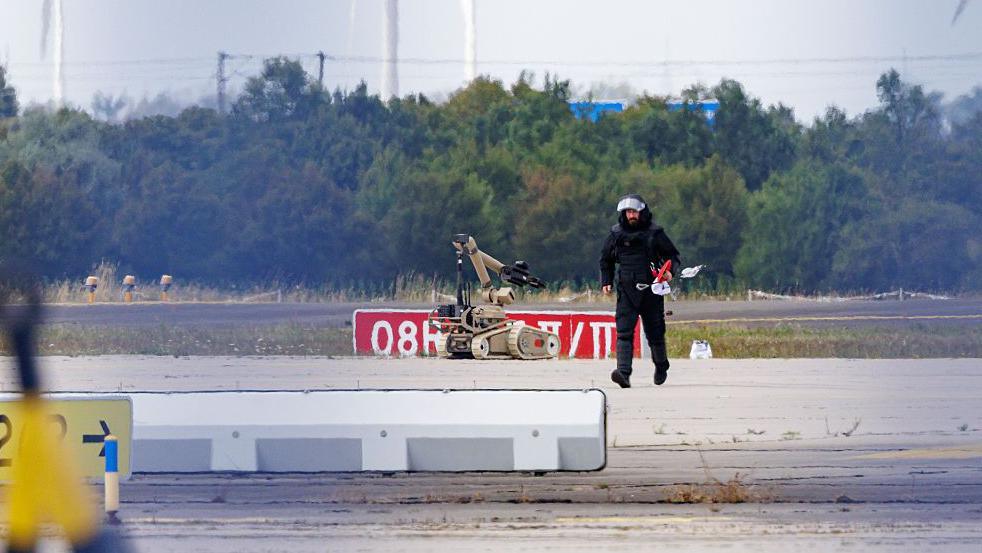
The quadcopter was spotted hovering between Ukrainian Antonov cargo aircraft, prompting a sudden runway lockdown. A bomb‑disposal robot was brought in to wrest the device from the tarmac, preventing a potential blowout near the active runway.
Reports note that a DHL cargo plane had also collided with an unidentified object while attempting to land, raising questions of whether a second drone was involved.
An Earlier Plot in 2024
A 2024 incident at the same airport involved a package of incendiary devices that ignited just before flight departure. Similar packages set ablaze in the UK and Poland, prompting international investigations. Polish and Lithuanian courts are now asserting that the suspects were part of a Russian intelligence‑backed network that trafficked RDX explosives across borders, often hidden in grocery cans and headphones.
Vladyslav’s Story
Ukrainian suspect Vladyslav D. admitted to moving “drones with headphones” to hidden spots across Eastern Europe, after receiving instructions from an alleged Russian contact named “Warrior”. He claims he earned more than $2,000 in cryptocurrency for these tasks.
Authorities have traced several of the drone components to a hostel room in Düsseldorf and to a bin bag in a Lithuanian cemetery. No definitive target for the deployments has been identified.
Moscow’s Motive?
Experts argue that Russia’s involvement would aim to sow fear and undermine confidence in German aviation and allied supply chains. “It’s a message that we can infiltrate the biggest European airports,” said Andrei Soldatov, a specialist on Russian intelligence.
The presence of Semtex and RDX mirrors a pattern of sabotage targeting facilities aiding Ukraine, suggesting a broader strategy of hybrid warfare.
International Response
A NATO spokesperson confirmed they were aware of the incident and that German authorities continue investigations. Antonov Airlines stated it had not confirmed any specific threats to its cargo flights.
Ukrainian officials said they could not determine the drone’s purpose, while analysts like John Lough of NEST highlight the likely rise in hybrid attacks as Ukraine’s drone capabilities shift the war balance.