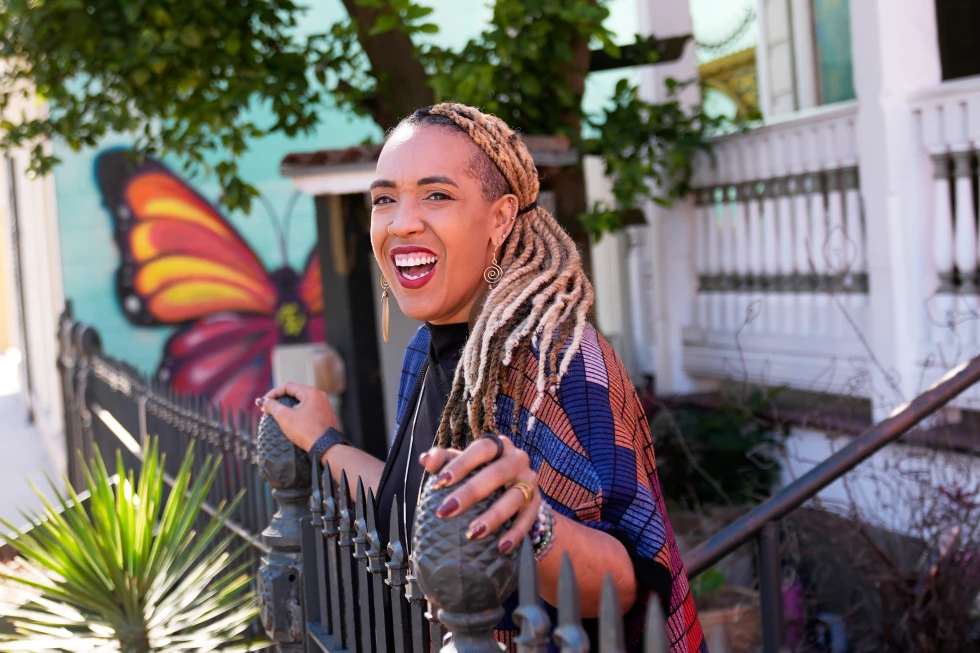
LOS ANGELES — The Trump administration's foray into AI-generated imagery is raising eyebrows, as officials increasingly share manipulated visuals across official channels. Among these images is an edited portrayal of civil rights attorney Nekima Levy Armstrong, which has provoked discussions about the intersection of technology and political messaging.
Homeland Security Secretary Kristi Noem’s account originally posted a factual image of Levy Armstrong's arrest, followed by the White House sharing a version that depicted her in tears. This alteration has come under scrutiny as experts express concerns about the capacity for AI-generated content to distort perceptions of truth in a politically charged atmosphere.
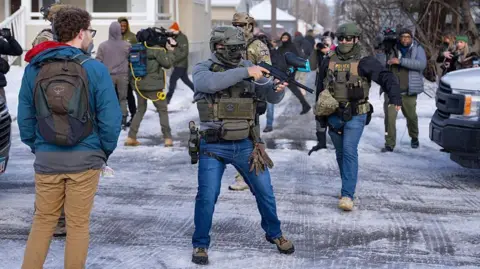
The widespread circulation of AI imagery parallels recent events involving U.S. Border Patrol officers and spurs fears of a misinformation crisis. Critics argue that such actions pose a risk to public trust, with many questioning the motives behind using manipulated images—believing they could be viewed as jokes or memes trivializing serious issues.
David Rand, a professor at Cornell, suggested that the term "meme" used by the administration to describe the altered content serves to deflect criticism, complicating the understanding of its seriousness. Insights from communication professionals indicate that this strategy effectively engages a niche online audience while risking broader confusion and distrust among the general public.
Experts and media literacy advocates are calling for more stringent measures, advocating for systems that could verify the authenticity of images shared in the public domain. The data-driven nature of current social media dynamics prompts a troubling concern; it appears we must confront a reality where the lines between manipulated imagery and actual events are increasingly blurred.