
In brief
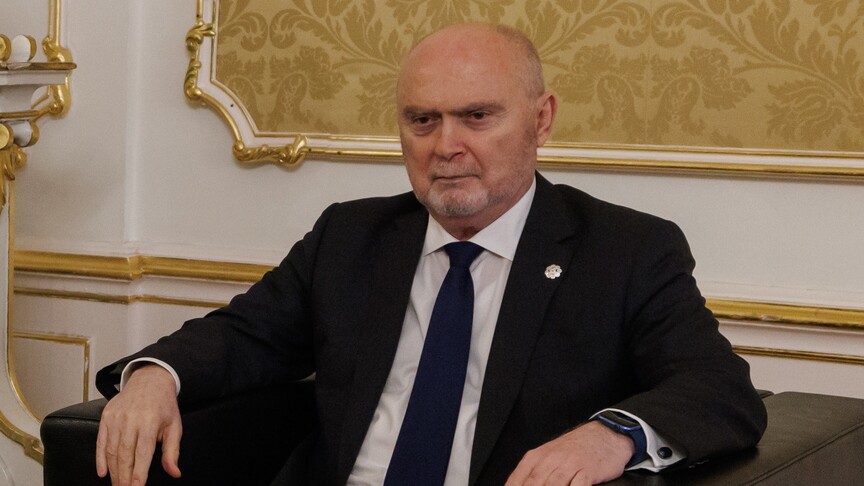
In a move that underscores Turkey’s engagement in global governance, Ankara officially put forward Feridun Sinirlioglu, the secretary‑general of the OSCE, as its candidate for the UN secretary‑general position. The nomination arrived after the latest Security Council straw poll ended inconclusively, stalling the selection process. Eight other candidates have already been put forward, and the next secretary‑general will be appointed by the General Assembly once the Security Council reaches consensus.
On Friday, 31 October 2026, Turkey formally nominated Feridun Sinirlioglu, the secretary‑general of the Organization for Security and Co‑operation in Europe, as its candidate for the United Nations secretary‑general, Turkish Foreign Ministry sources said. The announcement came from a letter sent to the presidents of the General Assembly and the Security Council by Turkey’s UN envoy Ahmet Yildiz, carrying President Recep Tayyip Erdogan’s formal nomination in line with the UN Charter and a General Assembly resolution.
Sinirlioglu’s name was put forward after a dead‑lock in the selection process, with the most recent straw poll conducted in the UN Security Council ending inconclusively. The format of the poll, which requires a candidate to secure at least nine votes in the Security Council, means the process could drag on until consensus is found or a veto from one of the five permanent members—United States, China, France, Russia or United Kingdom—throws a candidate out of contention.
Once a majority in the Security Council is achieved, the final appointment is formally made by the General Assembly, a step that is generally considered a formality. This is true even though the five veto‑holding members retain the power to block or support any nomination, and the result will ultimately be decided on the floor of the Assembly, where the current secretary‑general, Antonio Guterres, is scheduled to step down at the end of December 31, 2026.
Turkey is not the only country to have put a candidate forward. Eight other individuals have already been nominated. The list includes Costa Rican diplomat Rebeca Grynspan, International Atomic Energy Agency Director General Rafael Grossi of Argentina, former Senegalese President Macky Sall, Guyana’s UN Ambassador Carolyn Rodrigues Birkett, former UN General Assembly President Maria Fernanda Espinosa of Ecuador, former Chilean President Michelle Bachelet, Ugandan politician and diplomat Olara Otunnu and Ecuadorian diplomat Ivonne A‑Baki. Each of these candidates has been introduced by their respective governments following the same procedure outlined in the UN Charter.
Implications of Turkey’s Nomination
Turkey’s decision to back Sinirlioglu has been interpreted by analysts as an effort to broaden its diplomatic influence and give the country a notable voice in the next ministerial transition. By nominating an incumbent senior diplomat from the OSCE, Ankara positions itself as a bridge between European security concerns and the overarching global agenda of the UN.
Observations from domestic and international observers suggest that the nomination may also represent a strategic pivot in Turkey’s foreign policy, a move that seeks to align Turkey more closely with European institutions while retaining its distinct voice on issues spanning from regional security to multilateral cooperation. Whether Sinirlioglu can gain the necessary support in the Security Council and ultimately be elected by the General Assembly remains to be seen. However, the nomination confirms that Turkey is actively shaping the next chapter of the United Nations’ leadership and is ready to bring its perspective to the world stage.

