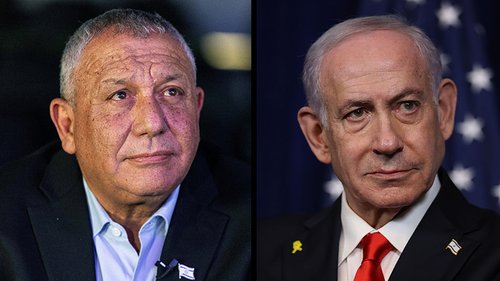
On Tuesday, Israeli voters cast ballots in a parliamentary election that left no single party or bloc with an outright majority, according to United Press International, while the Arab bloc set a record with 19 seats in the 120‑member Knesset.
United Press International reported that Netanyahu’s right‑wing bloc was projected to secure 53 seats, with Likud alone projected to win 26, falling 15 seats from the previous parliament. The opposition bloc led by former military chief Gadi Eisenkot had 48 seats, according to the same outlet.
Amid the unfinished count, United Press International also noted that the Arab bloc was set to receive 19 seats, 12 for the Joint List and 7 for Ra’am, surpassing the previous record of 15 seats set in 2020.
Stated by the same source, the Saudi article also listed an earlier figure of 17 seats for the Arab bloc, indicating a slight discrepancy that remains unresolved as the final tally is expected by Friday.
United Press International confirmed that 77.7% of eligible voters turned out, the highest turnout since 1999, with nearly 80% of votes counted by Wednesday afternoon.
In a social‑media post, Eisenkot said, "The preliminary poll results point to complete distrust in Netanyahu and the government of Oct. 7, of the Zionist majority and the majority of Israeli citizens. If these are the final results, this is a victory for the statist‑Zionist majority in Israel."
Following the announcement of the preliminary results, Netanyahu told supporters that his right‑wing bloc held a decisive majority among the Jewish and Zionist public, calling Likud "the largest party in Israel" and stressing the need for a "strong, right‑wing, national government."
Al Jazeera highlighted that, without a clear majority, the future government would depend on coalition negotiations that could either involve Arab parties or force the two major blocs to cooperate, given that neither side seemed prepared to ally with the Arab bloc at the present stage.
Shortly after the preliminary count, the Tel Aviv Stock Exchange experienced a sharp decline, as reported by Xinhua: the benchmark TA‑35 index fell 1.81 percent, while the broader TA‑125 index dropped 2.46 percent.
Nearby, the TA‑90 index, which tracks 90 non‑TA‑35 companies, plunged 4.47 percent, and the TA‑Banks‑5 index, covering Israel’s five major banks, fell 4.85 percent, according to the same Xinhua story.
Gad Lior, a senior analyst with the Israeli daily Yedioth Ahronoth, attributed the sell‑off to political uncertainty and the possibility that a newly formed Netanyahu‑led government might again struggle with economic challenges, notably the high cost of living.
He also noted that fears of a renewed conflict with Iran further weighed on investor sentiment, contributing to the market volatility.
Simultaneously, the Israeli shekel weakened against major world currencies; Xinhua reported that it slipped 1.62 percent against the U.S. dollar, reaching 3.128 shekels per dollar at official exchange rates.
Joseph Freiman, CEO of Israeli financial group Prico, explained to Xinhua that the shift in election results triggered the reversal of the shekel’s earlier gains, as Netanyahu’s bloc gradually accrued the lead during vote counting.
The final vote count is expected to be completed by Friday, with official results slated for publication on November 4, according to Al Jazeera, as the Central Elections Committee anticipates a full tally of double‑envelope ballots.
President Isaac Herzog will later consult party leaders on his preferred candidate for prime minister, granting that candidate 28 days to form a coalition, with a possible 14‑day extension, a process highlighted by Al Jazeera to determine the next governing body before another election is called if coalition formation fails.