In brief
In a highly orchestrated display of diplomacy, Xi Jinping welcomed Vladimir Putin to China just days after Donald Trump's visit, emphasizing Beijing's pivotal role in global affairs. The receptions were strikingly similar, signaling China's intent to project power and the narrative of a nation not aligned with any single global player. As Xi negotiates with challenged leaders, the dynamics of the China-Russia relationship illustrate the shifting geopolitical landscape where Russia leans on China more than ever, especially amidst Western sanctions due to the Ukraine war.
Xi Basks in Spotlight as He Hosts Putin Days After Trump
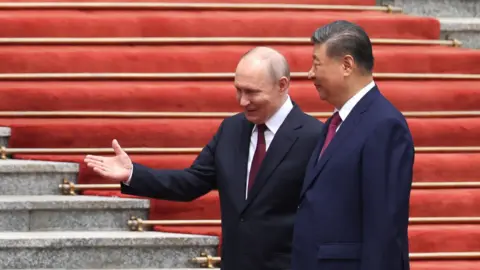
Cheering children, military honor guard, cannon fire, and marching band—the welcome for Vladimir Putin outside the Great Hall of the People mirrored the reception Donald Trump received just a week prior. Such high-profile visits are part of a calculated strategy by Xi Jinping to project an image of China as a central player in global diplomacy, showcasing the nation's growing economic and political clout.
According to analysts, these visits signal a shift in world affairs that is increasingly less centered around the West, with China's influence expanding significantly. While Putin has long been a well-known figure in Beijing, attending more than 20 times since becoming president, the current geopolitical climate emphasizes the disparities in their partnership, especially regarding Russia's dependence on China amid its ongoing isolation due to the war in Ukraine.
During the meetings, agreements were reached on various trade and technology collaborations, yet key issues, such as the stalled Russian gas pipeline, remain unaddressed. Analysts suggest that while both nations need each other, the balance of power has shifted decidedly in favor of China.
Xi's dynamic diplomatic engagements suggest that China is repositioning itself not just as a nation to contend with but as a preferred collaborator, especially as the U.S. under Trump's administration grapples with its foreign policy challenges and internal crises.
The optics during Xi's engagements with leaders like Trump and Putin demonstrate a calculated balancing act—highlighting China's considerable economic stature while navigating the complexities of global conflicts. While renouncing military incursions against sovereign nations, Xi’s cautious omission of Russia's actions in Ukraine during talks with Putin raised eyebrows and highlighted the intricate geopolitical balancing act Beijing must maintain.
As Xi projects confidence on the global stage, his government's recent diplomatic efforts reflect both an adept recognition of changing global dynamics and the challenge of being criticized for its authoritarian practices. This diplomatic tightrope signifies China's ambition to reshape international relations and asserts its status as a power to engage, contrary to its previous isolationist whispers.