UK Government Unveils Ambitious Plan to Phase Out Animal Testing
The government has detailed for the first time how it aims to fulfil its manifesto pledge to work toward phasing out animal testing.
The new plans include replacing animal testing for some major safety tests by the end of this year and cutting the use of dogs and non-human primates in tests for human medicines by at least 35% by 2030.
The Labour Party pledged to partner with scientists, industry, and civil society as they work towards this goal.
Science Minister Lord Vallance expressed his vision for a potential complete phase-out of animal testing in the future, although he acknowledged the need for time and careful planning.
Animal experiments saw a peak in the UK in 2015, reaching 4.14 million cases, predominantly due to an increase in genetic modification tests. This figure fell to 2.88 million by 2020, but subsequent years have seen a plateau.
Lord Vallance intends to brainstorm traditional animal testing methods, exploring alternatives like stem cell-grown tissues, artificial intelligence (AI), and computer simulations.
By 2025, the government aims to stop using animals for specific major safety assessments, opting for modern laboratory methods typically involving human cells.
Although advocates support this shift in perspective, some scientists caution that reaching a 'near zero' threshold for animal testing may be particularly challenging due to safety and methodological concerns.
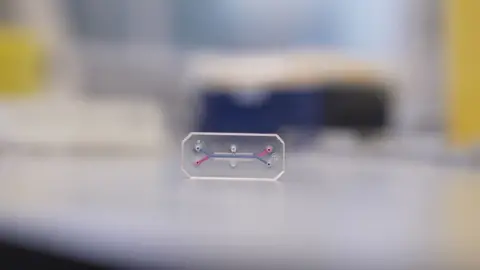
As a leading center for alternative testing methods, the Centre for Predictive in vitro Models (CPM) at Queen Mary University is advancing ‘organ-on-a-chip’ technologies to reduce the usage of animal models in research.
Additionally, the government plans to establish a Centre for the Validation of Alternative Methods, boost funding for innovative solutions, and promote non-animal techniques between 2026 and 2035. However, the reactions from both the RSPCA and scientists echo a mix of cautious optimism and skepticism regarding the transition.