In brief
Nearly six months into a stalled U.S.-Iran conflict, President Trump has rolled out an "economic D-Day" that threatens any nation doing business with Iran with severe economic repercussions. The move comes amid doubts that past sanctions and diplomatic efforts have stalled, forcing Washington to target secondary sanctions against third‑party lenders, shipping firms, and offshore fronts that funnel funds to Tehran. While Iranian officials point to their history of evading pressure, analysts argue the new strategy hinges on allies’ willingness to punish themselves for enabling Iran. The real test will be how nations such as Turkey, Iraq, China and others respond to the threat of secondary sanctions tied to the U.S. dollar.
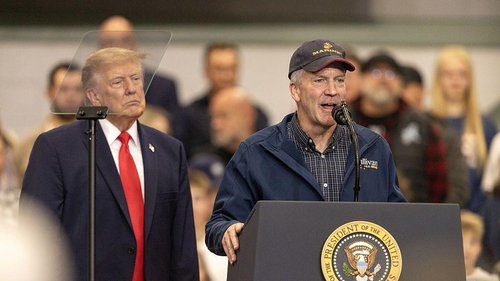
A full‑scale U.S. economic offensive has been announced after a six‑month stalemate in the Iran conflict. President Donald Trump vows to make any country that conducts business with Iran subject to "tremendous" economic penalties.
While Washington’s sanctions regime has long targeted Iran—tracing back to the 1979 Iranian Revolution—the toughest measure to date was the withdrawal from the Joint Comprehensive Plan of Action in 2018. In the current phase, officials assert that further economic pressure is necessary, reflecting a view that military options hit an impasse.
Treasury Secretary Scott Bessent said the new "economic D-Day" will tackle any nation—friend or foe—who extends a lifeline to Tehran. Bessent called the approach a "new phase" of the conflict and stressed that U.S. trade and financial incentives are the strongest tools available today.
Vice‑President J.D. Vance echoed this sentiment on the Clay Travis and Buck Sexton show. He described the policy as "the best way to ultimately achieve our objective" and said the U.S. will maintain pressures until the political goal is secured.
What makes this move distinct is the focus on secondary sanctions—broadening the economic blast radius to nations that do business with Iran, especially those whose economies depend on transacting in U.S. dollars. Analysts say Iran has shown a remarkable ability to adapt to sanctions, using shadow vessels, new commercial fronts, and low‑profile banking networks to circumvent restrictions.
Experts from the Atlantic Council and the Chicago‑based Office of Foreign Assets Control argue that the strategy relies on the willingness of third‑party states such as Turkey, Iraq or China to forego banking with Iran. "The success of these sanctions depends largely on the targeted countries’ cooperation," said one expert. Yet many nations have a history of balancing their economic interests with U.S. demands.
The federal announcement also launched "Operation Economic Fury," a two‑pronged approach that blends U.S. Treasury‑coordinated sanctions and a naval blockade of Iranian ports. The direct impact on Iran’s oil trade and financial networks remains to be seen.
In the virtual newsroom, journalists can watch the economic D-Day unfolding through live streaming of Treasury briefings, and navigate the geographic layers of the sanctions through interactive maps. Metaviewers can access the real‑time positions of U.S. naval assets and the flow of oil traffic along strategic choke points.
With uncertainties about the United Kingdom, European Parliament and other multilateral partners, the U.S. administration’s assertion remains that "you are either with us or against us, or we will take action against you." The broader diplomatic universe will bear the outcome of whether these sanctions can finally tip the balance in Washington’s favour.