In brief
In Dallas, former President Donald Trump pledged a $5,000 payout to every adult citizen if Republicans win both chambers of Congress, a plan that could cost over $1.3 trillion. The promise, dubbed “Trump dividends,” was declared amid rising oil prices and a war between the U.S., Israel and Iran. Democrats slammed the offer as an empty promise and questioned its legality under federal election laws. Analysts debate whether the pledge could be defended as a tax cut under the First Amendment while highlighting the potential fiscal and legal challenges. The announcement has sparked debate across the political spectrum as the 2026 midterm elections approach.
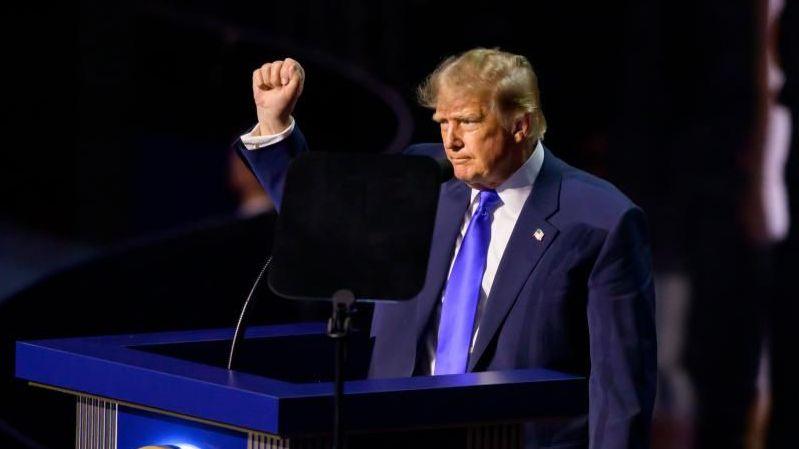
Donald Trump announced on a Tuesday at the Republican National Convention in Dallas, Texas, a pledge to grant every adult citizen $5,000 if the GOP secures a majority in both the House and Senate.
The offer, dubbed "Trump dividends," would involve roughly 270 million adult Americans, raising the cost of the program to an estimated $1.3 trillion—a figure far beyond the current federal budget. Trump gave no detail on funding sources or mechanisms for ensuring the money would be spent domestically.
The speech was framed against the backdrop of the ongoing U.S. and Israel war with Iran, which has already driven up oil prices and slowed economic activity. Trump insisted the policy was meant to counter "the influence of Tehran" and that "short‑term pain" would be necessary to protect America’s interests.
Democratic leaders and election‑law experts immediately dismissed the promise as an "empty promise" and questioned whether it violates federal rules that prohibit monetary incentives designed to influence voting. Some analysts argue it could be framed as a tax‑cut proposal, which would be protected under the First Amendment.
The announcement has already sparked debate across the political spectrum as the 2026 midterm elections approach, with supporters cheering the bold move and opponents warning of the fiscal and legal implications.