
In brief
Behind the bright smiles of Sherbo Island’s fishermen lies a quiet crisis—catch volumes have slumped significantly, and the community points fingers at foreign trawlers violating an official exclusion zone. Testimonies from local fishers recount nights when nets are mysteriously severed, forcing them to replace gear at a cost of up to £189. The problem, part of a wider global phenomenon, is compounded by allegations of corruption at the national fisheries ministry and a lack of enforcement, while governments point to transponders that allegedly track offending vessels. International advocates demand stricter monitoring, better consumer choices and stronger legal spill‑over from China’s fisheries fleet. As local economies feel the pinch, the debate over sustainable, transparent fishing practices takes centre stage in Sierra Leone’s coastal communities.
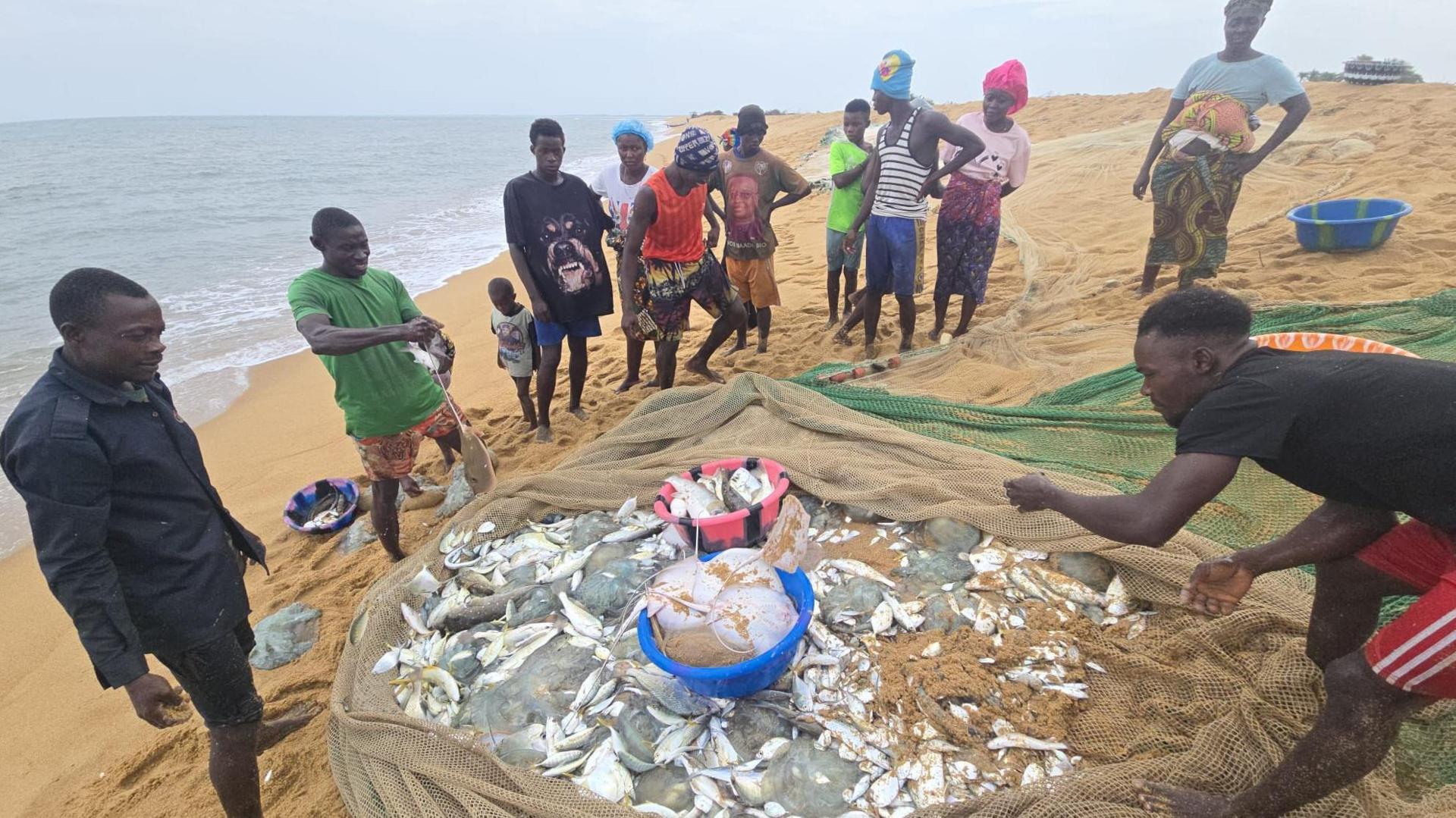
The bright, red‑hued nets that vein the sandy beaches of Sierra Leone’s Sherbo Island are now home to a smaller catch. Every evening, a dozen or more villagers haul in snapper, mackerel, barracuda and rays, but the haul is visibly lighter than it used to be.
"We cast our nets in the evening and return to shore. In the night, the trawlers come and deliberately cut the lines," says fisherman Musa Gassimo, his voice trembling.
Local fishers claim that large, foreign vessels—including an overwhelming number from China—enter coastal waters in violation of the seven‑mile exclusion zone and either haul resources or sabotage nets. One woman, Marie Pierre, says she finds discarded jellyfish where her nets used to be, and suspects “unlawful trawling” as the cause of lower yields.
The claim is part of a larger pattern of illegal, unregulated, and unreported fishing that World Bank data show accounts for about 40% of all illicit catch in West Africa. Estimates place the loss at roughly £10 bn to local and national economies, sparking government promise of stricter enforcement.
“The fish belongs to us, but foreign trawlers come into the seven‑mile zone and violate our waters,” declares Thomas Turay, president of Sierra Leone’s Fishermen’s Union. He accuses authorities of corruption, arguing that those who profit from illicit fishing can bribe officials to silence complaints.
The Sierra Leone Ministry of Fisheries insists that all foreign vessels carry transponders to track movements. Yet the ministry’s spokesperson, Sheku Sei, warns that some ships switch off these devices to evade sanctions in other jurisdictions.
Producer<|reserved_200604|> person Kai, a volunteer at the Environmental Justice Foundation, cites the example of Latin American waters where China faced global denunciations over illegal fishing. He demands that China’s subsidies for over‑seas fleets be scrutinised and that consumer pressure help divert demand away from unsustainable fish products.
While the government continues to tout strong penalties, no recorded instances of fines have been issued in the last decade. The debate therefore hinges on the future of Sierra Leone’s shoal and whether foreign fleets will be held accountable.
The catch is not just about a few seas; it’s about a community’s future, global food supply chains and a planet’s marine conservation. Consumers decide whether to purchase sustainably sourced fish or ignore the plight of fishermen.
For a deeper look at the legal battles, see Business Daily: Who’s behind Sierra Leone’s illegal fishing problem?