In brief
In the wake of a chaotic weekend of riots and looting across France, authorities have imposed overnight curfews in central Paris and several other cities to restore order. Police reported that around 2,500 people were arrested and 1,000 officers were injured, while a hand was reportedly blown off by a police crowd‑control grenade. Interior Minister Laurent Nuñez admitted police had lost control in some towns and is investigating by analysing CCTV footage, while Prime Minister Sébastien Lecornu pledged financial aid for affected areas and hinted at a possible state of emergency. The unrest, sparked by students demanding better school conditions, has now drawn in trade unions and other protest groups, raising concerns about safety across Europe.
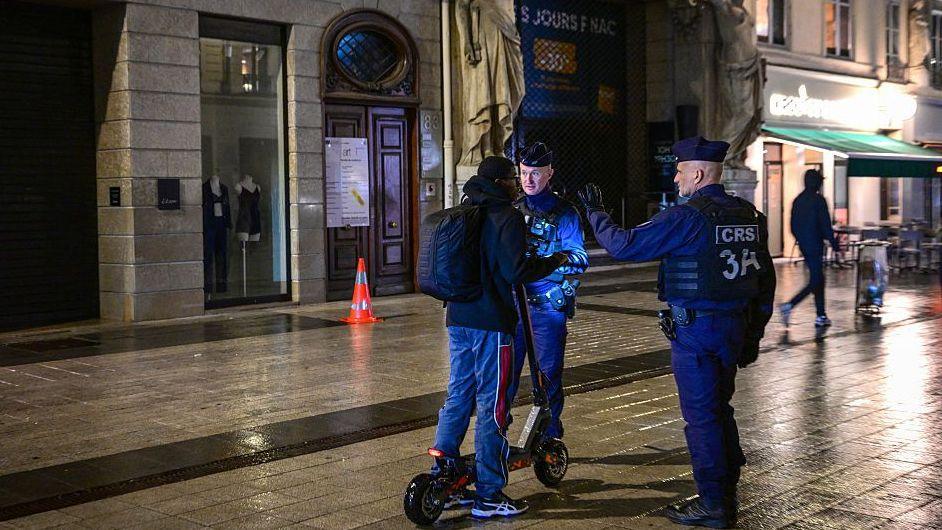
French authorities have imposed overnight curfews in parts of central Paris and other cities after a weekend of riots and looting across the country.
Police in Paris announced a curfew would run between 23:00 local time and 06:00 in key areas such as Place de la République and Les Halles shopping district.
Similar bans on unauthorised gatherings were extended to other city centres, while partial curfews targeting young people and gatherings were imposed in Marseille, Bordeaux, Nice, Lyon, Lille and towns in the north.
Interim Interior Minister Laurent Nuñez admitted police had "lost control" in some areas, a claim condemned by opposition politicians, though his resignation was rejected by President Emmanuel Macron.
The protests began last month with students demanding better school conditions and have now attracted trade unions and other groups. More than 2,500 people were arrested, and a demonstrator’s hand was blown off by a police crowd‑control grenade. About 1,000 officers sustained injuries.
After a crisis meeting on Monday, Prime Minister Sébastien Lecornu granted local mayors the authority to impose curfews "where they need", without naming specific cities. He also warned that if a state of emergency were declared, money would be set aside to help affected areas recover, and that the cost would be recovered from those responsible for the violence.
Lecornu added that a new law would ensure those who damaged property would have to pay, and announced an unemployment fund for people unable to work due to the riots.
Meanwhile, Nuñez said 200 investigators were analysing CCTV footage to identify possible ringleaders. He had attempted to resign on Sunday, but Macron declined, citing the need for continued command of law enforcement.
The French Chambers of Commerce and Industry reported that more than 2,000 shops were directly impacted, with damage estimated at hundreds of millions of euros. Shop owners in Marseille were described as being in "deep distress" and fearing for their survival.
Vinted has removed listings of stolen goods, while the Vinted spokesperson said the sale of stolen items was strictly prohibited. The platform is monitoring suspicious activity closely.
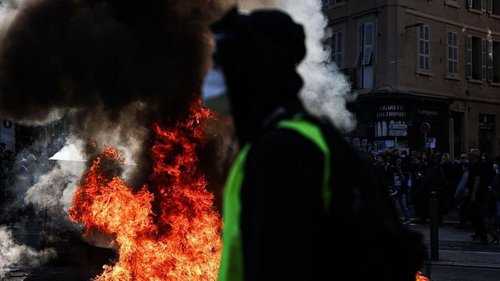
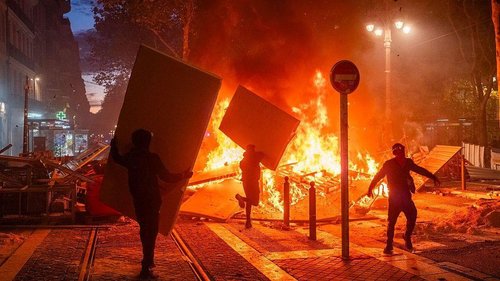
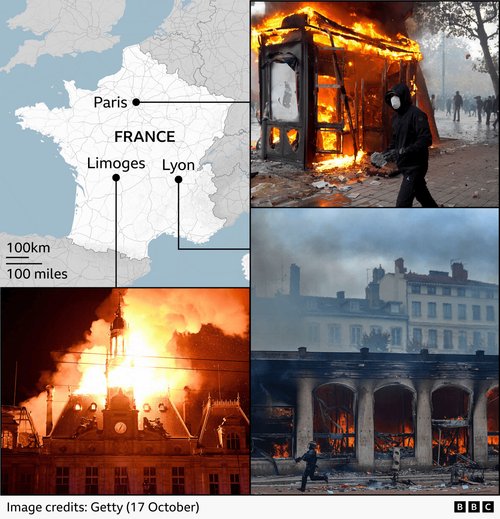
Approximately 550,000 demonstrators took to the streets over the weekend to protest rising fuel prices, the cost of living and deteriorating public services, including schools. Groups of rioters—some wearing masks and balaclavas—set fire to cars and burned buildings in Paris, Marseille and other cities.
In Limoges, the ornate 19th‑century city hall was gutted by fire, its clock tower collapsing as flames took hold. The US Embassy in France issued an alert advising citizens to avoid affected areas, and China and Germany issued similar warnings.
Some politicians blame the left‑wing La France Insoumise party for the violence; Lecornu alleged that some groups wanted to create chaos before the presidential elections. The party’s leader Jean‑Luc Mélenchon demanded the PM prove his accusation or apologise.