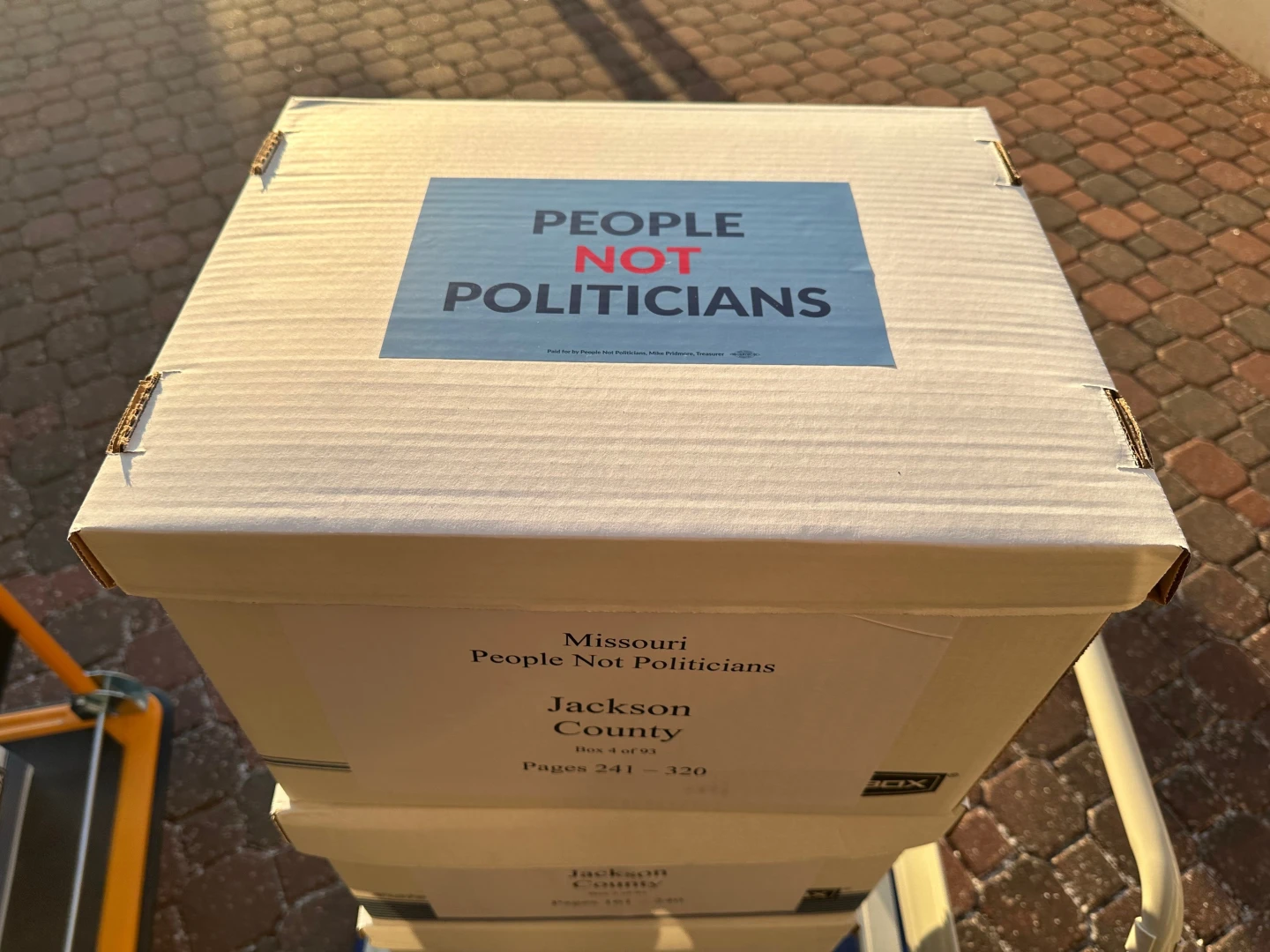
JEFFERSON CITY, Mo. (AP) — In a bold political maneuver, opponents of Missouri’s controversial congressional map submitted over 300,000 petition signatures on Tuesday, calling for a statewide vote aimed at suspending the redistricting plan until a public referendum can be held.
This newly drawn map has been heavily criticized for being designed to help Republicans maintain a slim majority in the upcoming elections, particularly after being backed by former President Donald Trump.
Organizers of the petition drive clarified that their efforts have collected well over the necessary 110,000 signatures required to pause the new U.S. House districts from taking effect until after a public vote, which is slated for next year. The signatures will undergo verification by local election authorities, and Republican Secretary of State Denny Hoskins has previously contested the legality of this referendum, claiming it could be unconstitutional.
Should the signatures be verified, this referendum could pose a substantial challenge for the Republican Party, as they aim to secure a Democratic-held seat in the Kansas City area during the November elections.
State law necessitates that any referendum is slated for the November election unless the General Assembly opts to arrange an earlier date during its regular session that starts in January. The potential statewide vote on the redistricting plan has ignited tensions, with both sides mobilizing resources to influence public opinion. People Not Politicians, the organization sponsoring the campaign against the map, has secured about $5 million in donations chiefly from out-of-state groups.
Conversely, Republican-aligned groups have countered with over $2 million backing the new congressional map. Allegations of attempts to thwart the referendum have arisen, with claims that Republican organizations have sought to offer up to $30,000 to individuals to refrain from gathering signatures for the petition.
As this contentious issue unfolds, Missouri finds itself at a pivotal moment in terms of redistricting, with the history of a century since the last referendum on congressional redistricting hanging in the balance, when Missouri's approved map was defeated by nearly 62% of the statewide vote in 1922.