
In brief
The humanitarian situation in Gaza worsens as countries demand an end to the violence.
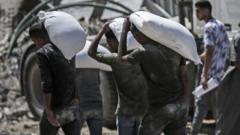
The UK, alongside 27 other nations, has urgently called for the cessation of hostilities in Gaza, highlighting the extreme suffering of civilians that has "reached new depths." In a joint statement, they criticized Israel's approach to aid delivery, which they describe as perilous, and condemned the "drip feeding of aid" and the killings of civilians, including children, who are merely seeking food and water.Reports from Gaza's Hamas-run health ministry claim that well over 100 Palestinians lost their lives due to Israeli fire while waiting for food over the recent weekend, with an additional 19 fatalities reported from malnutrition. The Israeli foreign ministry dismissed the accountability suggested in the statement, asserting it was "disconnected from reality," and accused Hamas of disseminating falsehoods while obstructing aid distribution.Israeli tanks have notably advanced into Deir al-Balah city in Gaza, marking a significant escalation as strikes continue to take a severe toll on civilians. The statement from UK Foreign Secretary David Lammy painted a grim picture of the situation, detailing a "litany of horrors" and expressing that the deaths of "desperate starving children" underscored the urgent need for change.In a gesture of support for humanitarian efforts, Lammy announced an additional £40 million in assistance to Gaza for this year, asserting a commitment to Israel's right to exist while cautioning that the current actions jeopardize Israel's global standing and long-term security. The UN Secretary General’s spokesperson voiced profound concern regarding the deteriorating conditions, stating that crucial lifelines for survival are collapsing.Since May, reports of civilian deaths while awaiting food deliveries have become increasingly common. Following partial easing of an 11-week blockade, the Gaza Humanitarian Foundation (GHF), supported by Israel and the US, has been implementing a new aid system. However, this initiative has faced criticism from the UN and other organizations for not adhering to humanitarian principles and operating in unsafe conditions.The UN human rights office has documented at least 674 deaths near GHF aid sites and 201 along UN convoy routes, signaling a grim reality for aid seekers. With UN aid convoys blocked and rising malnutrition rates—affecting around 90,000 women and children—concerns have been raised about potential mass fatalities due to extreme hunger.Further complicating the situation, Israeli proposals to relocate Gaza's population into a "humanitarian city" in Rafah have been rejected by the 27 nations, which argue such measures constitute a violation of international humanitarian law. They urged all parties involved—Israel, Hamas, and the international community—to agree to an immediate and unconditional ceasefire.In response to the growing international pressure, Israeli officials maintain that Hamas is to blame for the ongoing conflict, diverting focus from the humanitarian crisis at hand. Despite acknowledging civilian casualties, the military affirmed its commitment to adhering to international law while coordinating aid deliveries.As the humanitarian catastrophe in Gaza escalates, the urgent calls for a resolution intensify, with both domestic and international implications looming large in the ongoing conflict.
