In brief
A vehicle ramming Berlin Pride on Saturday night killed a Polish woman and wounded at least 29 people. The main suspect, 21‑year‑old Abdul Ballout, was shot dead by police a day later. Shock in Germany has now turned to anger over Ballout’s release while still under judicial supervision, raising questions about how the justice system and security agencies have handled a known radicalised threat. Officials warn of potential reforms in terrorism law and prison supervision to prevent a repeat incident.
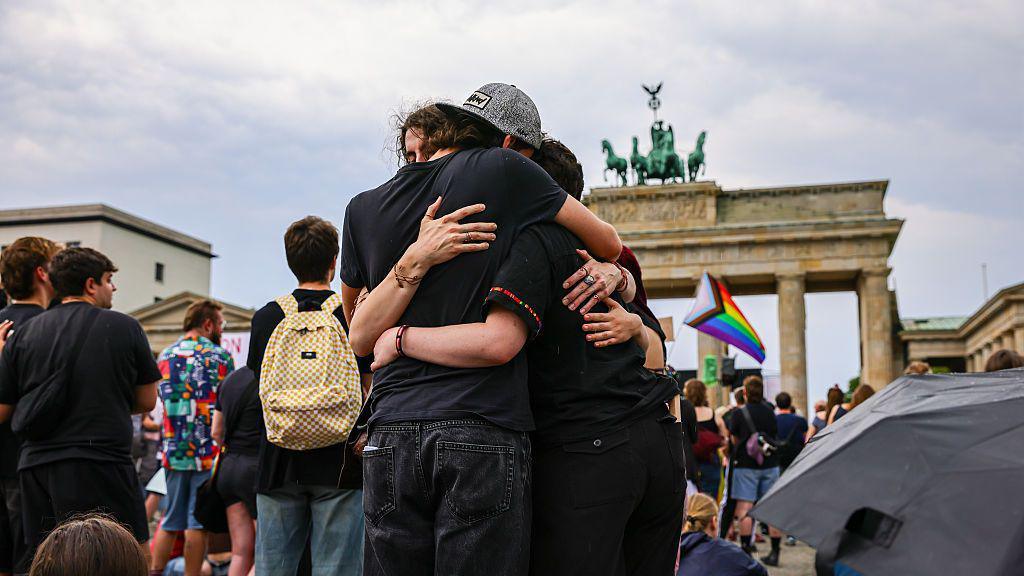
In Germany there is grief, shock and, increasingly, anger about the attack at Berlin Pride on Saturday night which left one Polish woman dead and injured at least 29 others.
The main suspect, Abdul Ballout, a twenty‑one year‑old German citizen with Lebanese heritage, was shot and killed by police on Sunday.
Interior Minister Alexander Dobrindt warned that Ballout had previously drawn attention to himself through a high volume of criminal offences, radicalisation and affiliation with the Islamist scene.
The case raises the question of why Ballout had not been in prison, with many demanding an explanation for his release into the community under probation supervision.
Ballout’s history began in 2025 when he attempted to join the Islamic State’s armed struggle in Syria via Turkey and Lebanon. He was arrested in Lebanon in July and sentenced to three months for incitement to religious and sectarian conflict. In November he was seized in Berlin Brandenburg Airport and detained pre‑trial.
A Berlin court later sentenced him to a juvenile sentence of one year and ten months for “preparing a serious act of violence endangering the state,” which was suspended pending appeal. He was released under a probation officer’s supervision, a decision that has drawn sharp criticism.
"The decision to impose a suspended sentence was certainly incomprehensible… given the level of danger in this case," Interior Minister Dobrindt told RTL, adding the authorities were investigating how it happened.
Berlin’s Governing Mayor, Kai Wegner, said he was dumbstruck at how the judiciary had handled the case. Opponents such as the Alternative for Germany party describe the attack as a total failure of security policy, demanding a thorough investigation into how Ballout could move freely.
Reports from Der Spiegel reveal Ballout had told the court he had distanced himself from extremist ideology and violence. Extremism expert Thomas Mücke noted Ballout had given a very composed, cautious and friendly impression to social workers, highlighting the difficulty of accurately assessing such individuals.
Calls for tightening Germany’s terrorism laws have grown, with academic Peter Neumann at King’s College London warning that the criminal law on terrorism is too lenient, especially for juveniles who are considered to be more focused on education than public protection.
Social Democrats’ home affairs spokesperson Sebastian Fiedler emphasised that rather than the law itself, its application was problematic, stressing the need to scrutinise why Ballout remained at large, who he was in contact with, and how surveillance gaps arose.
Friedrich Merz, Chancellor of Germany, said it was too early to evaluate political consequences but promised decisive action. "If individuals classified as threats cannot be detained, their freedom of movement should be restricted as much as possible," he told Deutschlandfunk radio. He called for a review of law regarding monitoring jurisdiction, noting difficulties in tracking mobile phones worldwide.