In brief
Netanyahu has taken a hard line on the occupied West Bank, announcing construction of more than 1 200 new settlement homes in the contentious E1 area. The move, backed by a right‑wing coalition, is viewed as a strategic effort to carve out a contiguous Jewish presence and undermine the viability of a future Palestinian state. The UN, EU members and several Arab governments have condemned the expansion as an existential threat to peace, while Palestinian authorities call for immediate halt. Meanwhile, increased construction of roads and outposts has accelerated under a civilian administration, widening the physical divide between East and West Jerusalem.
During a ceremony in the occupied West Bank last September, Prime Minister Benjamin Netanyahu declared that a Palestinian state would never be established, underscoring his promise that the land belongs to Israel. The announcement coincided with a government tender for 1 200 new settlement homes in the strategic E1 zone east of Jerusalem, a location that sits between existing Israeli communities and the Palestinian city of Ramallah.
International bodies have condemned the step. The UN Secretary‑General warned that the planned settlement poses an “existential threat” to a future Palestinian state, while the EU member states describing the move as “unacceptable” and “a wedge in the West Bank.” Palestinian Authority president Mahmoud Abbas condemned the plans and called for concrete measures to halt the expansion.
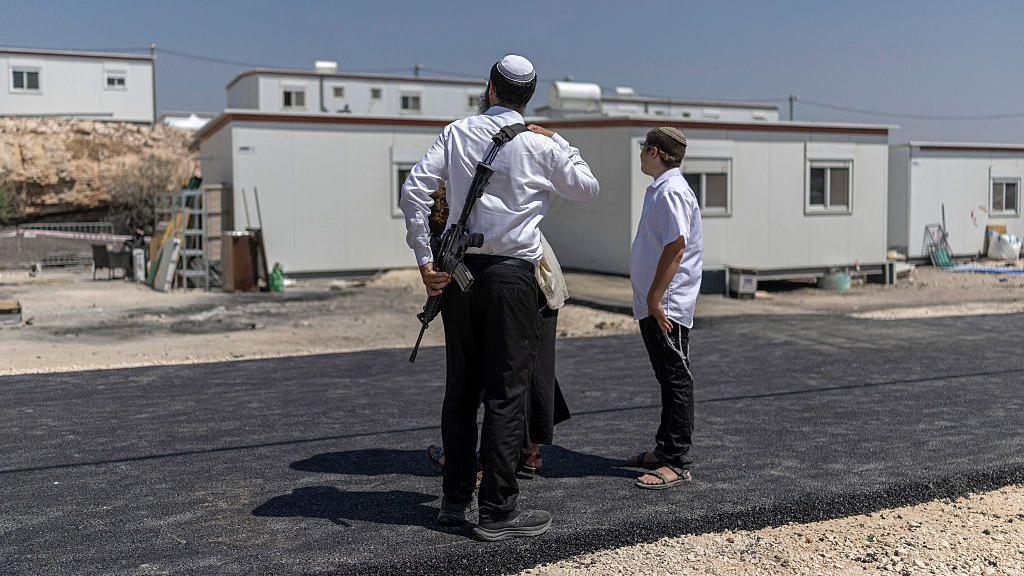
Despite decades of military‑camouflaged occupation, Israel has built around 160 settlements housing 700,000 Israelis since 1967. The growing pace of construction—seen in satellite imagery of Tzofim and Kochav Hashahar—has coincided with the rise in right‑wing governance and the escalation of Holocaust‑era Israeli law under civilian authority led by Bezalel Smotrich.
Edge‑installed roads, many of which now traverse the West Bank, cut through Palestinian villages, as highlighted by a recent map that charts seven completed and seven under‑construction settlement roads. A billion shekels of funding was announced for new roads aimed at “strengthening Israel’s grip on the territory.”
In addition, there has been a surge in settler violence. Two Palestinian homes were besieged, with water and power cut off, prompting U.S. Ambassador Mike Huckabee to label the attack a “criminal and terrorist act.” All of these actions feed fears among Palestinians that “facts on the ground” will render statehood unattainable.
Netanyahu’s campaign of settlement expansion is likely aimed at appealing to his voter base ahead of upcoming elections. If unable to win decisively, the government may believe that the new built‑up realities will be difficult to reverse. The drive to expand settlements and the accompanying infrastructure underscores a broader strategy: establishing sovereignty in Judea and Samaria through physical presence and legislation.