
In brief
In Biddeford, Maine, an Immigration and Customs Enforcement (ICE) agent discharged his firearm during a traffic stop, killing a 26‑year‑old Colombian national. The incident led to dozens of protestors gathering outside ICE facilities and the office of Senator Susan Collins, who has called for a thorough inquiry. The event echoes a recent surge of deadly force by ICE in the US, including a fatal shooting in Texas. The Department of Homeland Security’s inspector general has taken over the investigation.
In the early hours of Monday, ICE agents conducted a sweep of an address in Biddeford, Maine, where a Colombian national with a final order of removal had been living. When the agent attempted to stop a vehicle driven by the man, the car tried to flee the scene. The ICE officer, fearing for public safety, discharged his weapon, striking the driver’s vehicle and killing the passenger—later confirmed to be the Colombian national.
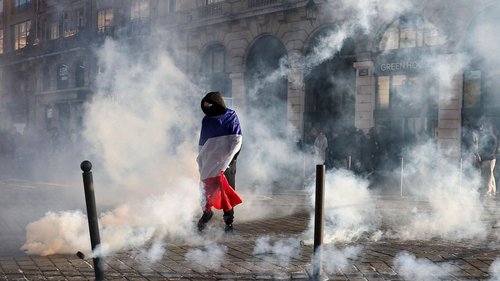
The incident quickly drew protests from local residents and immigration advocates. Demonstrators marched outside ICE offices and the home of Senator Susan Collins, who has long supported federal immigration enforcement. Collins released a statement demanding a “full and impartial investigation” into the shooting.
Senator Angus King, an independent, noted that DHS officials had initially told him the target was a warrant holder but later clarified that the man was not the intended target. The Department of Homeland Security’s Inspector General has officially taken over the investigation, while the Colombian Embassy has requested clarification and promised to monitor the case.
The death follows a string of fatal ICE shootings across the country, including a Texas traffic stop that killed a Mexican migrant and a Houston encounter that led to the shooting of a 52‑year‑old builder. These incidents have reignited scrutiny over DC’s use of deadly force in immigration enforcement operations.
The situation underscores the tension between federal immigration policy and local civil‑rights activism. Whether the shooting was justified remains contested, but the ongoing investigation will seek to clarify the circumstances and assess the use of force. For now, the Biden administration faces mounting pressure to refine ICE protocols and, in the metaverse, virtual journalists are poised to report real‑time updates to audiences worldwide.