In brief
Georgia is on the verge of becoming the first state to require daily weapons checks for students in public schools. A bill nearing passage mandates the installation of weapons detection systems in response to a school shooting in 2024 that claimed four lives. Proponents argue that these checks are essential for student safety, while critics highlight concerns over effectiveness, costs, and the potential normalization of gun violence in schools.
Legislation for Enhanced School Safety
ATLANTA (AP) — Georgia could become the first state to require every student to be checked for weapons upon entering public schools daily. This initiative is a direct reaction to a tragic school shooting in 2024 that resulted in four fatalities. The proposed legislation seeks to install advanced weapons detection systems with the aim of enhancing security and preventing future incidents.
“That rifle would have never reached our hallways,” stated Daria Lezczynska, a junior from Apalachee High School in Winder, the site of the shooting. “Lives would have been saved. Families would not be grieving, and students like me would not be carrying this trauma.”
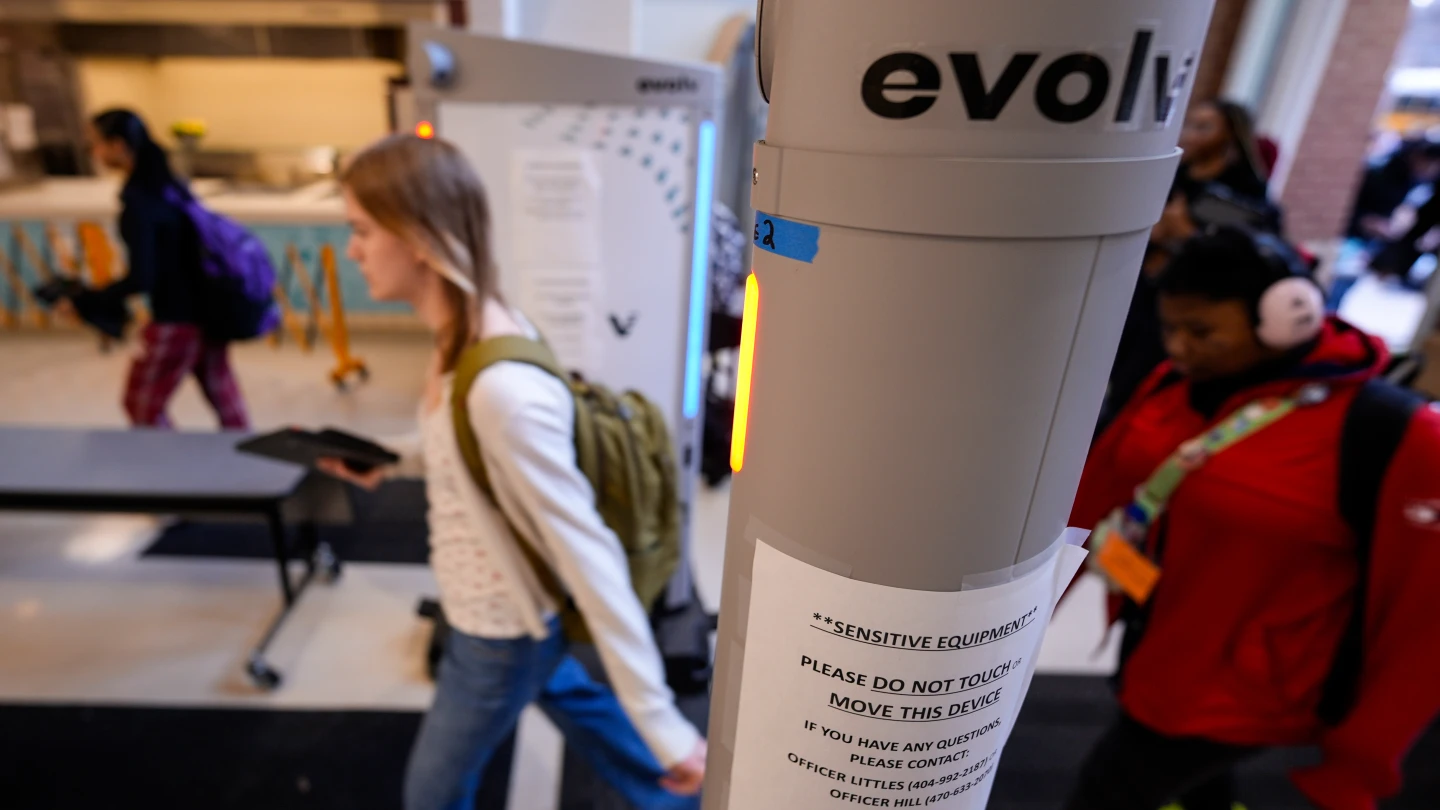
In the past, many schools utilized traditional metal detectors or mandated clear backpacks to mitigate weapon threats. However, modern technology has evolved, enabling more sophisticated detection systems that combine computer analysis with high-capacity cameras to identify various weapons, including knives and guns. These systems have expanded swiftly across schools, hospitals, and public venues.
Chuck Efstration, the bill's sponsor and majority leader, emphasized the necessity of such measures: “Georgia's students and educators deserve the same level of security found in courthouses.”
Nonetheless, there are ongoing debates regarding the effectiveness and funding of these detection systems. Critics point out the lack of rigorous research supporting their efficacy in preventing school shootings, raising concerns about financial responsibilities and operational challenges at schools. With the ability to cost $10,000 or more for installation per unit, funding remains a central issue, with some schools already allocating their budgets to other safety measures.
Potential for Changes in Security Practices
Nationally, only a minority of schools employ daily weapons checks; less than 3% report using metal detectors daily. In cities where poverty levels are higher and diversity is prevalent among students, the likelihood of having such safety measures increases. As of 2021, Atlanta schools spent over $4 million to upgrade their detection systems, leading to a dramatic decrease in gun discoveries from the previous year.
With the bill passed in a Senate committee recently, it now awaits further voting in the Georgia legislature before reaching the Governor’s desk. Advocates continue to push for the implementation of these systems, as questions about safety and the presence of firearms in educational environments persist.
Gretchen Walton from Cobb County highlighted, “While we absolutely think weapons detection is imperative, it can only be achieved with appropriate funding.” As discussions unfold, there remains a pressing need to evaluate the broader societal implications of increasing security measures within schools.
As the legislative session progresses, stakeholders from various sides are expected to engage in a heated debate about the future of safety in Georgia’s educational landscape.