In brief
In New York, Micro AGI’s Shift project sends camera‑clad cleaners to tidy apartments for free. The staff record everything back to the company, supplying massive amounts of data to train future robots. While the offer sparks interest for its promise of a higher-than‑average wage and a role in the AI revolution, privacy experts warn that the footage could be monetised beyond the initial service. Critics argue that the cost of personal privacy is too high, calling the practice a clever way for firms to sell data. The debate highlights how quickly tech‑integrated everyday services are reshaping work and privacy norms.

Picture this: a team of camera‑clad cleaners and a private chef swoop into your New York flat, tidy rooms and record every move… for free.
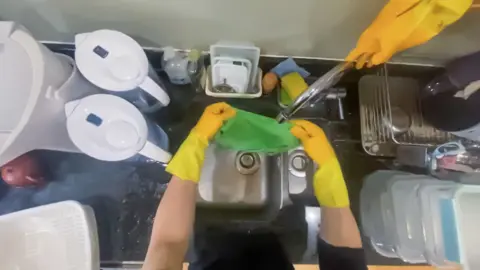
In reality, the service is offered by Micro AGI’s “Shift” project, which pays cleaners to clean several apartments a day while their heads hang cameras that stream everything back to the company.
Tonnes of data
Shift’s founder Bercan Kilic said the data is used to teach future robots to navigate varied homes and use odd tools.
“Every kitchen, living room and tool is slightly different, so robots need to adapt,” he told the BBC.
Privacy concerns
Data and privacy advocates warn that giving companies “free” access to your home may spill sensitive footage to third parties.
“Even if you trust the business collecting it, there is always a risk of them sharing that information with other businesses or governments,” said Rory Mir of the Electronic Frontier Foundation.
Not everyone is happy
While some residents like the free cleaning, others argue the price of the data is too high and jeopardises their privacy.
Calli Schroeder of the Electronic Privacy Information Center called the practice “a diabolically creative way to sell privacy invasion.”
Despite the concerns, many cleaners are excited to join the AI wave, noting that the pay is above the industry norm and the experience offers a glimpse into the future of work.
Whether this trend will shape the labor market remains to be seen, but the shift hints that robots could soon take over most repetitive domestic tasks.
See the BBC report on robots helping soldiers on the battlefield.