In brief
The Night of the Flamingos, started as a protest over a planned luxury resort near Narta Lagoon, has evolved into a nationwide movement demanding the resignation of Prime Minister Edi Rama. Protesters have broadened their chants to include demands for better schools, jobs, infrastructure and an end to alleged corruption involving oligarchs and international investors such as Jared Kushner. Despite claims from Rama that the demonstrations signal a healthy democracy, several of his close allies face anti-corruption investigations, and opposition voices like Fatos Lubonja accuse a building boom of facilitating money‑laundering schemes. Amid Albania’s rapid urbanisation and progress toward EU membership, the civil unrest underscores growing public discontent with the 13‑year-long Socialist Party administration.
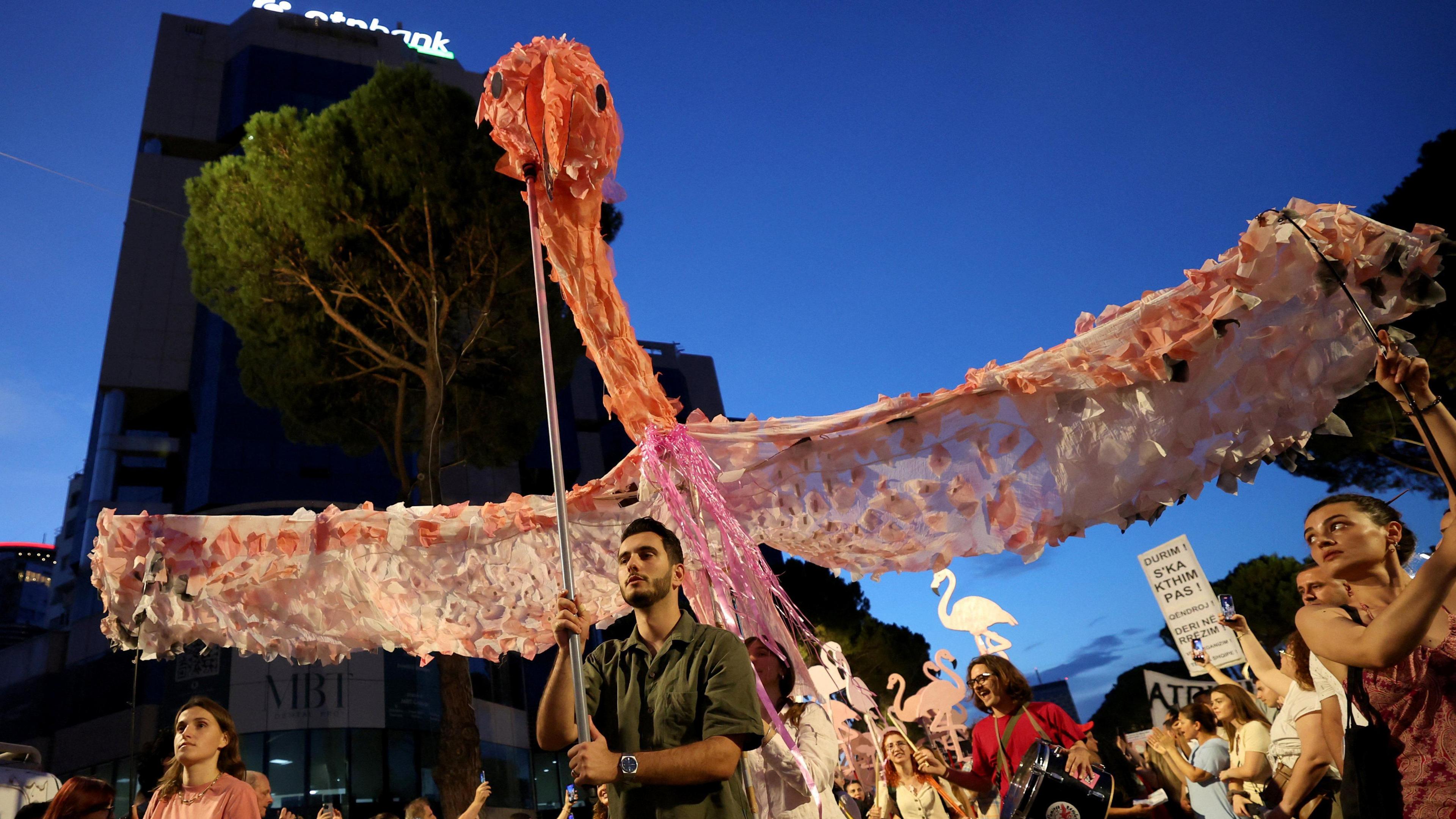
Thousands gather in Tirana, clutching pink flamingo‑shaped signs, chanting for the Prime Minister’s resignation. The movement, once a single night of protest against a luxury resort near Narta Lagoon, is now pushing for better schools, jobs, and an end to alleged corruption.
What started as a symbolic demonstration over the planned development, which would grant “special investor” status to a consortium that includes Jared Kushner, has grown into a nationwide outcry against what people see as a benefit‑driven, environmentally harmful project that invites foreign oligarchs into Albania.
Despite Prime Minister Edi Rama’s assertion that protests reflect a healthy democracy, the mood has shifted. Several of his closest allies, including a former deputy and the mayor of Tirana, are now under investigation by anti‑corruption prosecutors. Protests volunteers and local activists mourn the rapid transformation of Tirana’s skyline, arguing that the skyscrapers equip elitist projects that essentially do a money‑laundering exercise.
“I’m here for our schools, hospitals, infrastructure,” said 22‑year‑old Helena, telling the BBC. “I want to stay in Albania, because my family matters. That’s why I’m here.” These notes echo the sentiment of those like 30‑year‑old Fatos Lubonja, who served 17 years in a forced labour camp under Enver Hoxha and now claims that the building boom is driven by organised crime and corrupt internationals.
Rama, after reminding the nation that his Socialist Party is 13 years into power, stresses that his government’s “big contribution” to Albania is through reforms and giving its own skin for the country. Nonetheless, the accusations that his policies are a front for money‐laundering have eroded public trust.
As the nightly rallies continue, the citizens’ demand for a resignation becomes ever more pronounced, and the pink flamingos that symbolised a flash of resistance have become a permanent backdrop to Tirana’s streets.