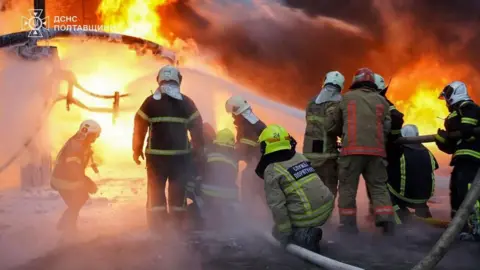
At least six people have died after Russia launched hundreds of missile and drone attacks on energy infrastructure and residential targets in Ukraine overnight.
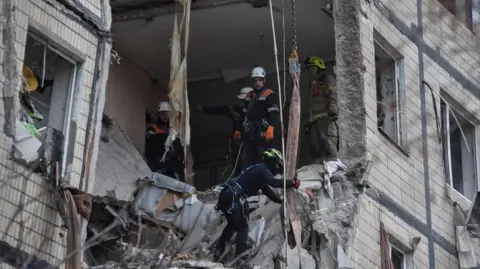
A strike on an apartment building in the city of Dnipro killed two people and wounded 12, while three died in Zaporizhzhia.
In all, 25 locations across Ukraine, including the capital city Kyiv, were hit, leaving many areas without electricity and heating. Prime Minister Yulia Svyrydenko said on Telegram that major energy facilities were damaged in the Poltava, Kharkiv, and Kyiv regions, and work was under way to restore power.
In Russia, the defence ministry said its forces had shot down 79 Ukrainian drones overnight.
The Ukrainian air force reported that Russia launched more than 450 exploding bomber drones and 45 missiles. Nine missiles and 406 drones were reportedly shot down.
The Ukrainian Energy Ministry noted that there were power cuts in various regions, but restoration work was ongoing. Svyrydenko indicated that critical infrastructure had already been reconnected, and water supply is being maintained using generators.
Russia argues its attacks target the Ukrainian military. Nevertheless, Ukrainian officials are concerned Moscow aims to undermine both civilian morale and the economy by disrupting energy supplies ahead of winter. This harsh winter could be a critical test for Ukraine's resilience against continued Russian aggression.
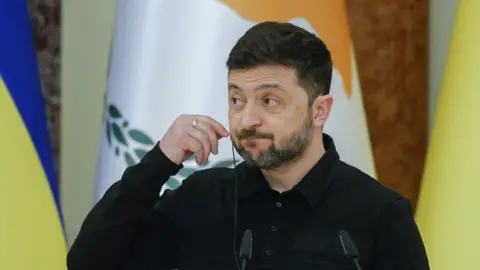
President Volodymyr Zelensky highlighted the need for intensified sanctions against Russian energy operations after these attacks, stating, 'for every Moscow strike on energy infrastructure...there must be a sanctions response targeting all Russian energy, with no exceptions.'
As Kyiv requests further support from the West, the conflict's toll on Ukrainian society grows increasingly significant, underscoring the urgency for cohesive international action against the escalated hostility from Russia.