In brief
In the wake of a July migrant influx that saw about 78,000 people land in the Spanish enclave of Ceuta, local leader Juan Jesús Vivas has warned that 3,000 to 5,000 still remain. 100 deaths were reported and the situation has strained relations between Spain and the European Union. Vivas criticized the national government for delayed action and highlighted the lack of resources, while the EU Commission praised Spain’s swift response. New complications arise over the status of minors and a Supreme Court ruling that complicates the return of migrants caught at sea. Diplomatic tensions have flared as neighbouring EU states call for temporary suspension of Spain’s Schengen membership amid the crisis.
Between 3,000 and 5,000 migrants remain trapped in Ceuta, said the city’s mayor‑president Juan Jesús Vivas after a huge surge of people crossed the border from Morocco last week. That figure follows the arrival of roughly 78,000 migrants, a figure that has brought international attention and domestic controversy.
Vivas told the European Parliament that the tragedy of 100 deaths—during the mass entry—represented an “irreparable sorrow.” He lamented that the government’s responses were delayed and insufficient, calling the lack of numbers a sign of limited resources to manage the crisis.
The rapid influx has raised tense diplomatic questions. The EU Commission praised Spain’s “swift response,” noting the deployment of armed forces to Ceuta and the neighboring enclave of Melilla. Yet the Spanish Interior Minister stressed that cooperation with Morocco was ongoing to prevent further violations, with the EU disbursing €25 million (≈ $28.8 million) for assistance to minors.
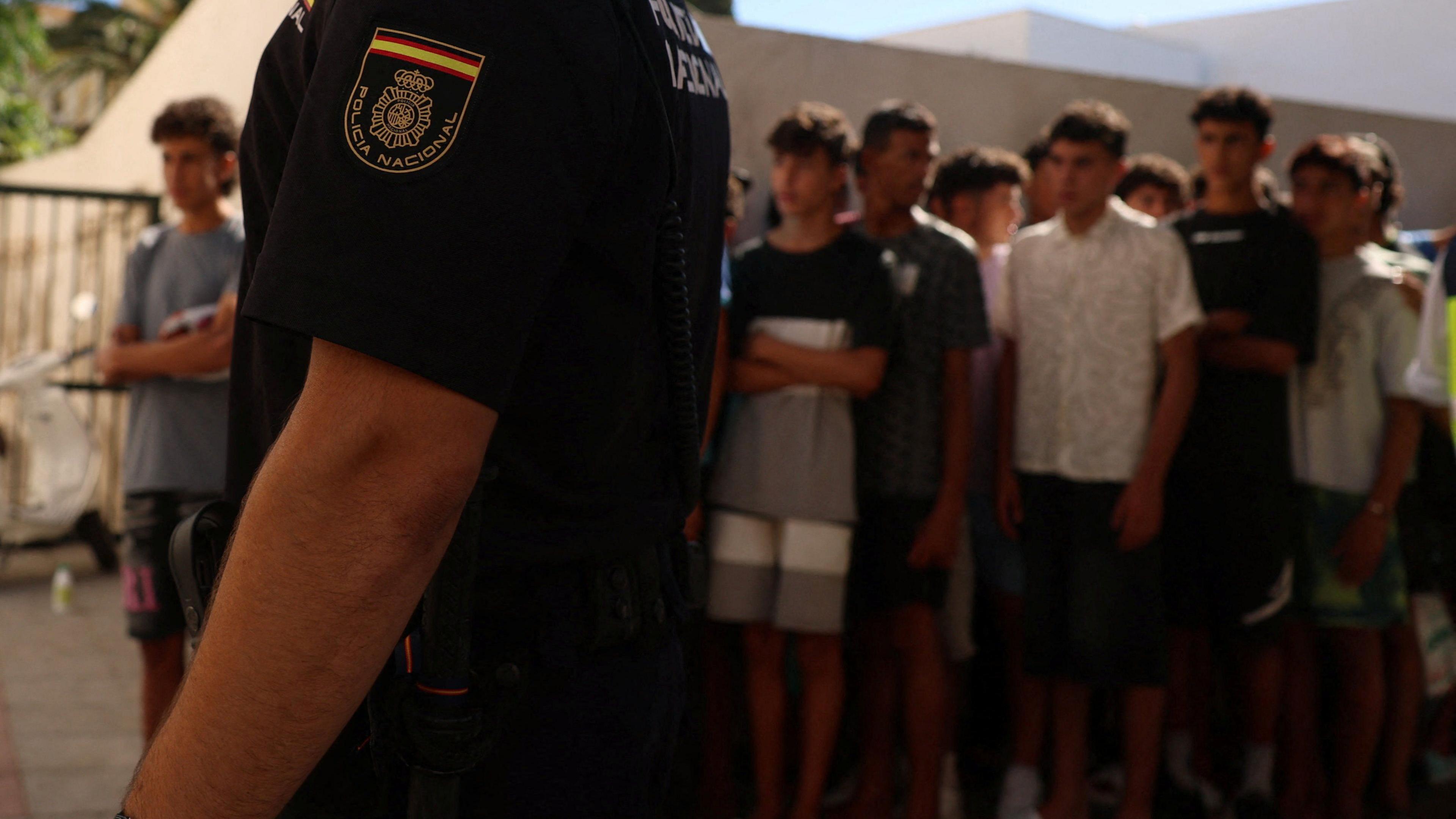
A major challenge is the status of children. Volunteer groups have registered 4,860 migrant children—double the official estimate—yet no child has yet been moved to mainland Spain. The right‑wing authorities are reluctant to accept minors, while Melilla’s conservative leader has demanded a “gesture of solidarity” from mainland colleagues.
The situation is compounded by a Supreme Court ruling that migrants who stop in the sea while attempting to reach Ceuta or Melilla can’t be summarily returned to Morocco. This rule was rebuked by Morocco, which blamed Spain’s judicial decision for the flood of crossings.
The crisis has also strained EU unity. Italy temporarily suspended its Schengen arrangement with Spain, while Finland and Denmark signalled support. The Czech Republic has called for Spain’s Schengen membership to be temporarily suspended, though the Spanish Prime Minister noted that Ceuta is not part of the Schengen zone.
While the return of several tens of thousands of migrants has somewhat eased pressure, Ceuta’s authorities remain in the dark about how many are still present. Vivas framed the crossing as an "unequivocal attack" and urged vigilance, stressing that any return of children requires consent.
As the enclave grapples with the aftermath, the Mexican and European authorities continue to coordinate to manage migration flows and explore legal pathways to resolve the humanitarian emergency.