In brief
North Korea faced a unique challenge when a 5,000-ton destroyer capsized during its launch. Engineers creatively utilized balloons and a large workforce to successfully restore the ship to an upright position, showcasing an unorthodox method in naval engineering.
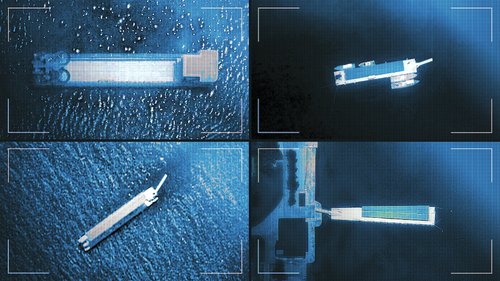
North Korea's naval modernization faced a major hurdle recently when a newly launched Choe Hyun-class destroyer capsized, prompting the nation to employ an innovative recovery strategy. According to satellite images and experts, the engineers resorted to the use of large balloons and the manpower of hundreds of workers, a method reminiscent of traditional techniques rather than modern machinery.The incident occurred late last month when the 470-foot vessel failed to properly launch, leading to its unfortunate capsizing in Chongjin harbor, located on the country's northeastern coast. Remarkably, just two weeks after the incident, the ship was seen floating upright about 580 feet from the launch ramp where it had originally failed.Experts like Hong Min from the Korea Institute for National Unification highlighted that in developed nations such as South Korea, recovery efforts would typically involve larger lifted equipment like barges with cranes to assist in righting a capsized ship. Other more widespread techniques include a method called parbuckling, which gained notoriety when the Costa Concordia was righted in 2013 following its disaster.North Korea’s reliance on balloons and human strength reflects its unique challenges in naval engineering amid modernization efforts, underscoring how resourcefulness can sometimes substitute for advanced technology. As the nation strives to enhance its military presence, such unconventional tactics may become a staple in overcoming logistics hurdles associated with naval operations.