
In brief
Delhi's alarming rise in pollution poses serious health threats, with PM 2.5 levels skyrocketing and residents advised to stay indoors.
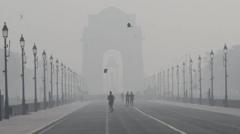
Living in Delhi has become perilous due to this year's stark rise in air pollution levels, categorized as "very poor" and "severe." Recent data reveals that pollution levels in the Indian capital have spiked to alarming heights, reaching up to 25-30 times above the World Health Organization’s (WHO) suggested safety limits. The crisis is anticipated to worsen due to a combination of weather conditions, Diwali festivities featuring firecracker use, and the burning of crop stubble from neighboring states.Each year, from October to January, Delhi and several northern cities grapple with intense air pollution, leading to school and business closures and significant health risks for residents. The concentration of PM 2.5 particles, which can penetrate deep into the lungs, reached a staggering 350 micrograms per cubic meter in some parts of the city, as reported on Monday by the government-run Safar website. The air quality is deemed "very poor" when PM 2.5 levels hit 300-400, while reaching "severe" status at 400-500.Seasonally, Delhi gets cloaked in smog, exacerbated by a mix of smoke, dust, and vehicular emissions, worsened by low winds and the burning of crop residue by farmers in Punjab and Haryana. Despite the pressing need for alternative clearing methods for agricultural waste, current government initiatives have yielded little success. Adding to this issue are the Diwali firecrackers. The government has declared a ban on their manufacturing and sale ahead of the festival, but past enforcement has proven ineffective, as residents often procure fireworks from other states.To combat pollution, Delhi has implemented the Graded Response Action Plan (GRAP), which prohibits coal and firewood use, as well as diesel generators for non-emergency purposes. Authorities have urged people to limit outdoor activities and use public transport to reduce vehicular emissions while curtailing construction work across the city. As the air quality crisis evolves, the health implications for residents become increasingly dire.

